Aiming to bridge the gap between faith and governance, Dr Abdul-Azeez Olajide Adediran, popularly known as Jandor, has declared that Zakat and poverty alleviation will form the core of his governance blueprint for Lagos State if elected in 2027.
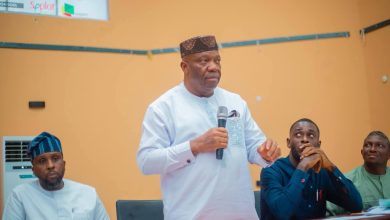
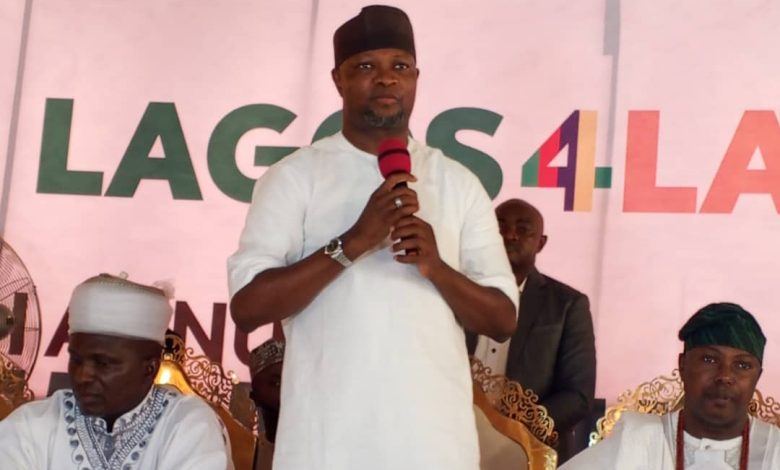
The governorship aspirant under the All Progressives Congress (APC) platform made the declaration during his 8th Annual Ramadan Public Lecture held at Lagos Television, Lateef Jakande Road, Agidingbi, Ikeja, on Saturday, March 7, 2026.
Speaking on the theme of the lecture, “Economic Empowerment and Poverty Alleviation: The Islamic Perspective,” Jandor emphasised the role of faith in promoting social justice and prosperity through governance.

“Every Ramadan, we hold public lectures as part of our itinerary, focusing on empowerment and bridging the gap between the rich and the poor.
“This year’s lecture has further strengthened my vision for Lagos,” he said
Highlighting the principles of Zakat and Sadaqah, Jandor stressed that Islam provides clear guidance for alleviating poverty and promoting economic fairness.
Read Also: Orile Agege LCDA Holds Interfaith Prayers for Speaker Obasa One Year After Impeachment Attempt
“As part of Zakat, we must be intentional in empowering those in need. Similarly, the government can emulate these teachings to prioritise citizens’ welfare and alleviate suffering across all sectors of the economy,” he added.
Reflecting on the challenges of his political journey so far, including the 2023 general elections, Jandor said he believes 2023 was a test from God, and his team has done what was required of them; now, they await the next step.
He also noted the historic significance of his ambition, pointing out that no one from the Badagry Division has ever served as governor, expressing hope that this would change in 2027.
The governorship aspirant further acknowledged the Tinubu-led administration for its efforts in demonstrating leadership and commitment to citizens’ welfare.
During the lecture, Jandor sought to connect faith-based principles with practical governance by emphasising a people-centered approach to policy and development.
“From Ramadan to reform, our goal is to ensure that governance uplifts every citizen and leaves no one behind,” he concluded.
Speaking on the topic, the guest lecturer, Fadeelat Shaykh Alhaji Abdulhakeem Muhammadu Awwal (Al-Jejewiyy), emphasised that the theme aligns with Islamic teachings, encouraging Muslims to be empowered financially.
He noted that Islam is not only about peace but also about enhancing the goodness of life, urging the gathering to always give with the spirit of Zakat, which is regarded as purification.
Alhaji Awwal also stressed that giving should be done in accordance with the principles of Zakat, by donating 2.5% of one’s wealth.
The clergyman added that Zakat’s principles must be strictly followed to reduce poverty in the country and that it can be given to family members other than parents.
He added that such principles can also be used to train people, create employment opportunities, and rescue Muslims from tribulations, thereby fostering a more equitable society and alleviating the economic struggles faced by many.
Quoting Allah, the guest lecturer reminded the audience to give zakat to the poor and to those eligible for its distribution.
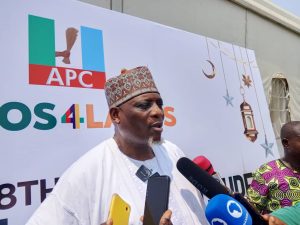
Speaking to media practitioners, the Chairman of the Organising Committee for Jandor’s 8th Annual Ramadan Lecture, Dr Idowu Aliu Agarawu, requested a repetition of the Waka recited earlier by the Imam during his welcome address.
He explained that the lecture is held annually to provide additional wisdom, which is why everyone is actively engaged, ensuring participants leave uplifted and joyful.
Dr. Agarawu emphasised that Islam does not promote poverty but provides a clear path to prosperity through Zakat and Sadaqah, as highlighted by the guest lecturer.
He further elaborated on how Islam forbids practices such as riba (usury) and hud (unjust gain), stressing the importance of being one’s brother’s keeper and managing wealth responsibly and recognising that “the fingers are not equal.”
This reflects the Islamic principles of charity, social responsibility, and economic justice.
He urged Muslims to continue performing good deeds and to seek Allah’s forgiveness consistently, even after Ramadan.
“Whatever has been forbidden for you during Ramadan remains forbidden after Ramadan, and whatever has been enjoined during Ramadan remains obligatory afterwards,” he concluded.
The Ramadan lecture drew key members of the Lagos4Lagos Movement, including religious leaders, ward chairmen, local government executives, and state leadership, underlining the movement’s decade-long engagement with Lagosians.