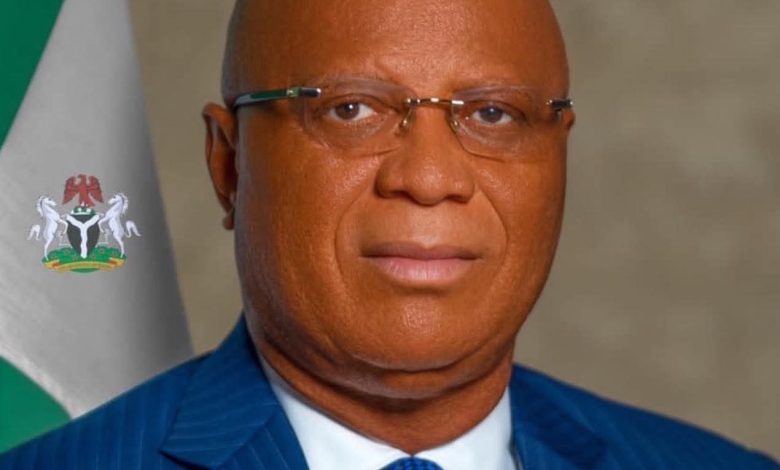
Since the return of democracy in Nigeria in 1999, Akwa Ibom State has developed a distinct, almost unwritten political tradition — a tradition of stability, continuity and reward for performance. It is the tradition of the two-term, eight-year governorship.
It began with Obong Arc. Victor Attah (1999-2007). He laid the foundation of the modern Akwa Ibom, fought for resource control, and served out his full two terms.
It continued with Obong Godswill Akpabio (2007-2015). He came with the uncommon transformation agenda, provided infrastructures that advanced Uyo as a modern capital, and served out his full two terms.
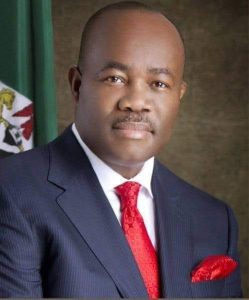
It was sustained by Mr. Udom Emmanuel (2015-2023). He came with industrialization and peace, completed major infrastructures, roads and aviation projects, and served out his full two terms.
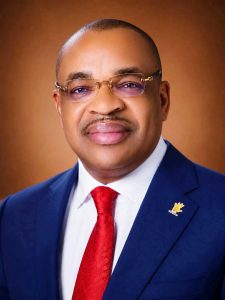
Three governors. Three different backgrounds. Three different styles. One common sequence: 8 years each.
The question now before Akwa Ibom people is simple and logical: If Attah had 8 years, if Akpabio had 8 years, if Udom had 8 years, why should Pastor Umo Eno not have 8 years?
Related: A’Ibom At 38: Gov Eno Celebrates Past Leaders For Contributions To Devt
The sequence is not just tradition, it is justice. The 2-term sequence is not an imposition. It is an expression of the collective will of the people. In each of the three previous cycles, the people looked at performance in the first term and said: “Let him finish the work.” Though contested, the will of the people always prevailed.
That same voice is now rising louder across the 31 Local Government Areas of Akwa Ibom for Governor Umo Eno.
Political stakeholders, traditional rulers, religious leaders, youth groups, women groups, and the ordinary people in the markets and farms have echoed the same thought: The sequence introduced since 1999 should flow. It should not be broken in 2027.
To break it now would be to create an exception where none existed before. It would be to deny Akwa Ibom the stability that has made it one of the most peaceful and steadily developing states in Nigeria.
In Eno’s case, performance has even settled the argument. So beyond tradition, there is a stronger argument being his performance.
When Pastor Umo Eno came on board in 2023, he presented to the people a development blueprint — The ARISE Agenda: Agricultural Revolution, Rural Development, Infrastructural Maintenance and Advancement, Security Management, Educational and Health Sector Advancement/Entrepreneurship.
Three years on, a look at what have been delivered alongside what was promised shows that he has not only kept his promise, he has surpassed it.
Across the 31 LGAs, the evidence is visible: roads, schools, health centres, rural electrification, agricultural empowerment, support for the elderly and vulnerable, payment of pension and gratuities, workers’ welfare, and a deliberate policy of peace and inclusiveness that has united a state that was once sharply divided along political parties. As he styles it, “Akwa Ibom United,” thus ensuring inclusiveness for all.
He has therefore served not as a governor of a party, but as a governor of all Akwa Ibom people.
That is why the clamour for his re-election is presented, not as a bid manufactured in Government House. It is a grassroots clamour backed by performance.
Therefore, 2027 is not about who to vote for, it is about continuity for the man on the seat. No one is saying other gubernatorial candidates are not free to seek the mandate of the people. Democracy guarantees that right.
But elections are decided by more than ambition. Track record, public acceptance, and the overwhelming decision of the majority at the polls.
And the preference by the majority of Akwa Ibom electorate today is clear: Umo Eno deserves a second term.
The 2027 gubernatorial poll in February 2027 will therefore not be a contest of uncertainty. It will be one on continuity, on stability, and on the completion of the ARISE Agenda.
Governors Attah, Akpabio and Udom were allowed to finish their 8 years because the people saw the value of allowing a good governor to complete his vision. To deny Umo Eno that same opportunity would be to ignore success and historical reality.
Akwa Ibom has a sequence. Akwa Ibom has a tradition. Akwa Ibom has a governor who is performing.
And so shall it be. Period.