Unlocking Destination Akwa Ibom: Inside the Private Sector’s Bold Shift On Tourism Development
By Edidiong Albert
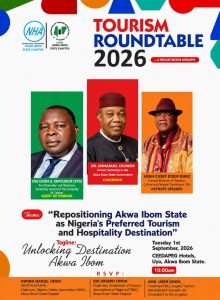
On Tuesday, September 1, 2026, about 200 leading tourism and hospitality operators, investors, policymakers, and scholars will converge at CEEDAPEG Hotels in Uyo, Akwa Ibom State.
Billed as the most important business meeting Akwa Ibom’s tourism industry has held in over a decade, the Tourism Roundtable 2026 convenes under the theme “Repositioning Akwa Ibom State as Nigeria’s Preferred Tourism and Hospitality Destination—Unlocking Destination Akwa Ibom”. The agenda is clear: after years of talking about potential, the private sector wants profit, performance, and a working tourism industry.
THE CONTEXT: INFRASTRUCTURE WITHOUT AN INDUSTRY
To grasp the meat of this summit, one must first understand Akwa Ibom’s economic paradox: the state has nearly every physical asset a thriving tourism industry needs yet lacks the commercial ecosystem to capitalise on them.
Aviation connectivity, anchored by the Victor Attah International Airport and its upcoming MRO facility, offers a rare regional advantage. This is reinforced by premier hospitality inventory from the iconic Ibom Hotel and Golf Resort in Uyo to the Four Points by Sheraton in Ikot Ekpene. Beyond modern facilities, the state boasts pristine coastlines, rich cultural heritage, an active diaspora, and pivotal historical landmarks, including Ikot Abasi’s colonial heritage sites, the Bridge of No Return, Ibeno Beach, and the Godswill Akpabio International Stadium in Uyo.

Crucially, state backing is already established. Under Governor Umo Eno, the ARISE Agenda prioritises tourism for economic diversification, directing public investment into major urban developments like the ARISE Park & Resort, Ibom International Hotel, International Convention Centre, and ARISE Shopping City.
Related: AKWA IBOM STATE: DROWNING THE JINX OF PRIVATE SECTOR INVESTMENT
Yet despite this exceptional mix and modern infrastructure, the commercial output remains thin. Capital investment has built world-class infrastructure, but it has not automatically created a market. Closing that structural gap is precisely where the private sector is stepping in.
WHO IS CONVENING, AND WHY NOW
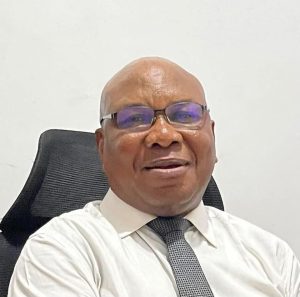
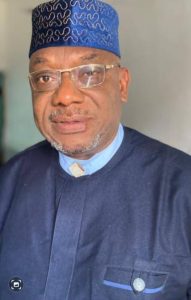
The Roundtable is a private sector initiative powered by the Nigeria Hotels Association (NHA), Akwa Ibom State Chapter, led by Obong Daniel Udoh (North-South); and the Federation of Tourism Associations (FTAN), Akwa Ibom State Chapter, under Sir Joseph Umoh. This assembly is a private sector-led intervention. It has strategic advisory from Amb. Usen Udoh’s Legacy Tourism Development Services Ltd.
In a joint statement, the organisers outlined a clear focus: “To shift the conversation from tourism potential to performance, profitability, and sustainable economic impact.” They also frame the effort as an alignment tool for the state’s broader plan, signalling that while the state government has built a world-class stage, the private sector must now produce and monetise the show.
Corporate sponsors including CEEDAPEG Hotels, Blueway Ocean Foundation, Archie Nigeria Limited, Watbridge Hotels and Suites, Madina Hotels & Residences, Albert Suites, and Kenduo Nigeria Limited and others have committed support to the table to show genuine commercial resolve.
THE SPEAKERS
The calibre of leadership at the Roundtable shows the weight of this gathering:
• Keynote speaker: High Chief Edem Duke, former Minister of Tourism, Culture and National Orientation, bringing national policy and destination branding authority.
• Chairman: Dr Emmanuel Ekuwem, former Secretary to Akwa Ibom State Government, tech entrepreneur, and former ATCON President, offering a blend of public-sector strategy and private-sector scalability.
• Moderator: Mr Etim Etim, veteran journalist and media consultant, steering the debate.
The panel of discussants represents the tourism value chain in human form:
• Sir Charles Sebastian Udoh – Tourism and Hospitality Management Expert, Brand Architect and Author
• Prof. Bassey B. Esu – Department of Hospitality & Tourism Management, University of Calabar
• Dr Nkereuwem David Edemekong – Historian, University of Uyo
• Mr Nkereuwem Onung – CEO RemLord Tours, Chairman BoT NATOP, and SSA on Tourism
• Sir Ini Akpabio – CEO Nanet Group, former Chairman Akwa Ibom Hotels and Tourism Board
• Mrs Faith Esohe Essien – Vice President, Federation of Tourism Associations of Nigeria (FTAN) South-South.
This mix matters. Where Nigerian tourism forums historically dissolved into government monologues or private sector complaints, bringing policymakers, scholars, operators and financiers to a single table bypasses routine conversations to engineer a functional blueprint for the state.
TEN BOTTLENECKS, ONE BLUEPRINT
• The Roundtable targets key systemic friction points that have historically capped the state’s tourism growth:
• Destination Branding and Management – Akwa Ibom is known for business travel and religious events. How does it become known for leisure, culture, and lifestyle?
• Tourism Investment and Private Sector Participation – Beyond hotels, where are the investors in attractions, tour operations, and experiences?
• Hospitality Standards and Visitor Experience – Are our service levels competitive with Lagos, Abuja, or Port Harcourt?
• Cultural Commercialisation – How do we package Akwa Ibom heritage into products people will pay for?
• Business, Conference and Events Tourism – We already host conferences. How do we extend the stay and increase spending?
• Tourism Infrastructure and Mobility – Roads to attractions, signage, and transport within the state.
• Community Participation and Local Economic Inclusion – How do host communities benefit, not just watch?
• Youth and Women Entrepreneurship – Tourism is a job sector. Where are the training and funding pipelines?
• Professionalisation and Capacity Development – Who is training the next generation of chefs, guides, and managers?
• Sustainable Tourism and Destination Competitiveness – How do we grow without destroying what makes us attractive?
Addressing these pillars directly removes the operational friction holding Destination Akwa Ibom back, shifting the industry from unrealised potential into a growing economic engine.
BEYOND A TALK SHOP: THE PROMISE OF STRUCTURE
To avoid the usual criticism that Nigerian conferences produce communiques with no follow-through, the organisers have designed the forum around some structural deliverables:
• Deal Flow. With investors and sponsors present, the expectation is that specific projects will be pitched, such as a heritage trail, a culinary festival, a coastal tourism corridor, and a training academy, for example. The platform must move from ideas to term sheets.
• Integration. Tourism fails when hotels, transporters, attractions, and communities operate in silos. Linking these groups will capture and retain visitor expenditure.
• Accountability. Establishing a permanent tracking mechanism so that commitments made in September 2026 are audited by September 2027.
THE REALITY CHECK
The September 1, 2026, summit brings to the fore the dire need for a partnership that works. The organisers have taken the gauntlet to bolster tourism in alignment with the ARISE Agenda. This is in recognition of the fact that true synergy demands strategic alignment, not just shared rhetoric. Genuine partnership requires both sides to play by the same economic rulebook.
THE BIGGER NATIONAL PICTURE
Akwa Ibom serves as an important test case for Nigeria. The federal government has promoted tourism as a non-oil revenue driver for two decades without building a market that competes globally. If Akwa Ibom, with its security, infrastructure and political backing, cannot convert that into a competitive destination economy, then the problem is not resources; it is organisational structure.
THE VERDICT: FROM POTENTIAL TO PERFORMANCE
Performance must be defined in concrete economic terms: a tourist lands in Uyo, stays five days, explores three local communities, spends on local dining and crafts, and leaves telling ten people to also visit and explore. It means hotel supply chains source directly from local farmers, and youths build viable careers as licensed tour guides, not just hoping for a government job.
The NHA/FTAN Roundtable 2026 represents a calculated bet that the private sector can drive that transformation. As Amb. Usen Udoh puts it, “Akwa Ibom possesses the assets. The imperative now is to unlock their full economic value.”