The Ibeno Clan Council has rejected the purported ‘Doctrine of Necessity’ being promoted by the Eket People’s Union (EPU), describing it as an attempt to use ethnic solidarity, historical grievances and political pressure to influence the political aspirations of Ibeno people and dictate voters’ choices ahead of the 2027 general elections.
The Secretary of the Ibeno Clan Council, Chief Okon Udofia, stated this while addressing newsmen at Upenekang on Saturday, insisting that no ethnic organisation possesses the constitutional authority to determine the political future of other communities or restrict the democratic rights of eligible citizens.
Udofia was reacting to a recent publication in The Southern Examiner, titled, “EPU Warns 2027 Candidates, Says Ekid Won’t Vote for Its Destruction – Governor Umo Eno’s Re-election Bid is Within the Union’s Doctrine of Necessity,” credited to the EPU President-General, Dr. Samuel Udonsak.
He described the development as a disturbing attempt to deepen ethnic divisions and revive historical grievances between neighbouring communities, stressing that while Ibeno had no objection to the political aspirations of Eket people or their right to organise under legitimate platforms, it would resist any attempt to extend such interests into the territory or infringe on the constitutional rights of other communities.
According to him, self-determination does not confer on any ethnic organisation the power to decide who contests elections, which political parties field candidates or whom the electorate should support.
Read Also: Educationist Canvasses Peace, Dialogue Over Ekid/Ibeno Crisis
He maintained that the 2027 elections should provide equal opportunities for qualified aspirants from Eket, Ibeno, Onna and Esit Eket Federal Constituency to participate in the democratic process without intimidation, ethnic restrictions or political coercion.
The Ibeno leader also faulted what he described as the continued exploitation of the 1993 communal crisis between Ibeno and Eket for contemporary political mobilisation, arguing that the tragedy resulted in casualties and losses on both sides and should not be presented as a one-sided historical experience.
He observed that the recent acknowledgement by the Ekid people that they also suffered casualties during the 1993 crisis was a significant admission, particularly against the backdrop of earlier expressions of bravado and threats to drive Ibeno people into the Atlantic Ocean.
Udofia said such acknowledgement should serve as a sobering lesson to both communities on the futility and devastating consequences of communal violence, rather than provide an opportunity to revive hostilities or encourage another generation to embrace confrontation.
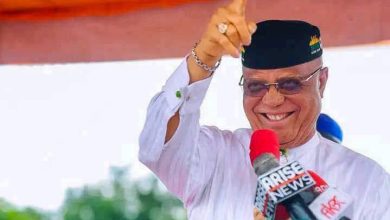
He cautioned against the continued chanting of war songs and inflammatory rhetoric, particularly in the face of Governor Umo Eno’s repeated appeals for peace and his determination to sustain an inclusive Akwa Ibom State where every ethnic nationality and citizen enjoys a genuine sense of belonging.
“The 1993 crisis should be a lesson on the devastating consequences of communal violence, not a political weapon for inciting another generation against its neighbours.
“Both Ibeno and Eket suffered losses, and the acknowledgement of casualties on both sides should remind us that nobody wins a communal war. We must reject war songs, inflammatory statements and every attempt to reopen old wounds.
Our collective responsibility is to preserve peace and ensure that such a tragedy never happens again,” he stated.
On the contest for Eket Federal Constituency, Udofia noted that an Ibeno indigene, Dr. Mrs. Eunice Thomas, was among those seeking election to the House of Representatives on the platform of the All Progressives Congress (APC).
He said her political ambition, like that of every other qualified aspirant, was constitutionally protected and should not be subjected to the approval or rejection of an ethnic organisation.
He added that the political aspirations of Governor Umo Eno and other Ibeno indigenes seeking elective offices should equally be determined through the democratic process rather than ethnic declarations or restrictive political doctrines.
“Democracy gives every qualified individual the right to contest and every political party the right to field candidates.
Ultimately, the people of Eket, Ibeno, Onna and Esit Eket will decide who represents them at the Green Chamber.
“No ethnic organisation should arrogate to itself the power to dictate the political choices of the electorate,” he said.
Udofia further emphasised that the electorate, rather than any ethnic pressure group, remained the ultimate authority in determining political representation through the ballot, cautioning against any interpretation of the Doctrine of Necessity that could compel voters to support or reject candidates based on their ethnic identities.
Recalling the peace agreement reached by Esit Udua community in Eket Local Government Area, which shares a boundary with Ibeno, he said the development demonstrated that dialogue, reconciliation and mutual understanding remained effective instruments for resolving communal disagreements.
He noted that the agreement had helped sustain peaceful relations between the neighbouring communities and should serve as a model for resolving differences rather than promoting narratives capable of reopening old wounds.
The Ibeno Clan Council Secretary expressed concern that the continued invocation of the doctrine could undermine the peace-building efforts of Governor Umo Eno, who has consistently advocated harmonious coexistence among the various ethnic nationalities in Akwa Ibom State.
He urged the EPU leadership and other stakeholders to embrace constructive political engagement and refrain from statements capable of generating unnecessary tension ahead of the 2027 elections.
The Council, however, warned that its commitment to peace should not be mistaken for weakness or unwillingness to defend the legitimate interests, dignity and constitutional rights of its people.
It called on security agencies to pay attention to public statements attributed to EPU President-General, Dr. Samuel Udonsak, concerning the mobilisation of Ekid people through the ethnic ‘Doctrine of Necessity’ against Governor Eno’s re-election and other APC candidates in 2027.
The Council warned that such political mobilisation, if pursued through inflammatory ethnic rhetoric, could threaten communal harmony, urging relevant authorities to take appropriate lawful measures to prevent any breakdown of peace.
It also urged the Independent National Electoral Commission (INEC) to ensure a free, fair and peaceful electoral process in Eket Federal Constituency, with adequate safeguards against voter intimidation, ethnic discrimination and political coercion.
The Council called on eligible voters across the four constituent LGAs to exercise their franchise freely and vote for candidates of their choice without fear or external pressure.
Udofia said the 2027 elections should be determined by candidates’ records, competence, credibility, development programmes and the freely expressed will of the electorate, rather than ethnic antagonism or the revival of historical grievances.
He reaffirmed Ibeno’s commitment to the unity and peaceful coexistence of Akwa Ibom State, insisting that no political arrangement or ethnic doctrine should be used as an instrument to deny any community its constitutional rights and democratic participation.