In rural communities across Akwa Ibom, the distance between a pregnant woman and a primary health centre can be the difference between life and death. That reality makes the recent “Wheels of Hope” medical outreaches by the Golden Initiative for All (GIFA) in Uyo, Onna and Ika local government areas more than ceremonial charity; they are a critical public health intervention deserving serious policy attention.
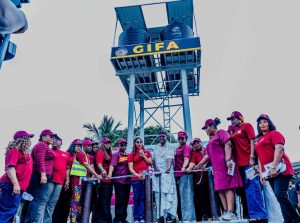
Recently, GIFA’s maternal and child health programme moved through Uyo, Onna and Ika LGAs, delivering free antenatal checks, child health services, routine medications and nutrition guidance to hundreds of women and children under five. In Onna alone, the outreach reached more than 500 pregnant women and 300 children aged 0-5, according to GIFA Team Lead Pastor Anne Abraham. The Ika phase marked the grand finale of the current cycle, extending similar services to thousands across Uyo, Onna, and Ika as part of GIFA’s second anniversary activities.
The initiative, led by the Coordinator of the Office of the First Lady and Chairman of GIFA’s Board of Trustees, Lady Helen Eno Obareki, draws inspiration from the legacy of the organisation’s founder, Dr Pastor Patience Umo Eno. But beyond its emotional roots, the programme is firmly grounded in global evidence on what works to save mothers and children.

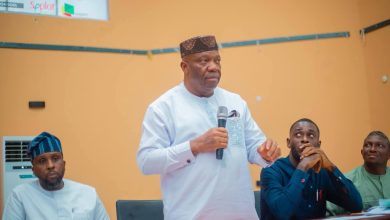
Founder of GIFA
The Data Behind the Urgency.
Nigeria remains one of the most dangerous places in the world to give birth. The World Health Organization estimates that about 287,000 women died globally from pregnancy-related causes in 2020, with sub-Saharan Africa accounting for roughly 70 per cent of those deaths. Nigeria alone contributes nearly one-fifth of global maternal deaths.
World Bank reports place Nigeria’s maternal mortality ratio at over 1,000 deaths per 100,000 live births in recent estimates, among the highest globally. UNICEF reports that Nigeria also ranks among countries with the highest number of under-five deaths worldwide, driven largely by preventable causes such as birth complications, infections, and malnutrition.
Read Also: GIFA: Putting Smiles On People’s Faces
“These deaths are largely preventable,” WHO Director-General Dr Tedros Adhanom Ghebreyesus has repeatedly stated, emphasising that timely antenatal care, skilled birth attendance, and postnatal follow-up are proven lifesaving interventions.
UNICEF further underscores the importance of the first 1,000 days, from conception to a child’s second birthday, describing it as the most critical period for brain development, immune system strength, and long-term health outcomes. Investments made during this window yield the highest returns in human capital.
It is precisely this window that GIFA’s “Wheels of Hope” programme targets.
Taking Healthcare to the Doorstep.
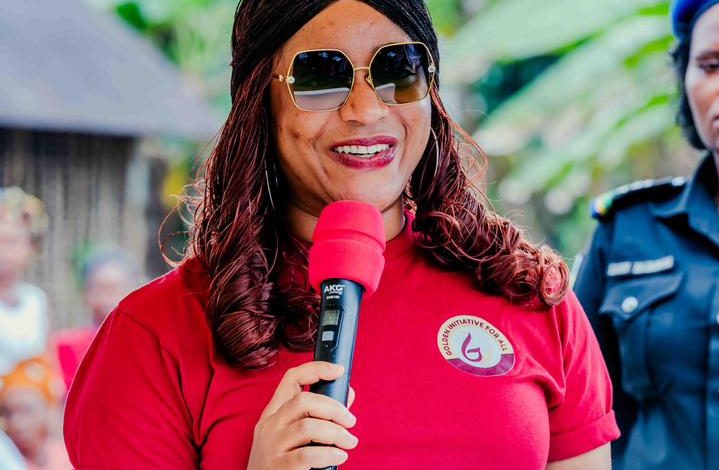
In Onna, Lady Obareki, represented by the Chairman of Esit Eket Local Government Council, Hon. Uduak Ikott, described the outreach as “a mother’s heartbeat in motion”, stressing that it was born from the belief that no woman should die while giving life and no child should be denied a healthy start because of geography.
In Ika, represented by the wife of the Deputy Speaker of the Akwa Ibom State House of Assembly, Mrs. Enobong Edidem, she explained that the programme was deliberately designed to reach communities where distance, cost, and limited infrastructure hinder access to healthcare.

This approach mirrors the World Bank’s primary healthcare framework, which shows that bringing essential services closer to communities significantly improves health outcomes, particularly in rural and low-income settings.
By decentralising care through mobile outreach, GIFA directly addresses three of the most persistent barriers to healthcare access in Nigeria: distance, cost, and health system congestion.
Beneficiaries’ voices reinforce the data. In Onna, Mrs. Enobong Peter described the intervention as “a huge relief” for women who struggle to access medical services. In Ika, Mrs. Peace Abraham called it “life-saving”, noting that many families received care they could not otherwise afford.
These testimonies align with findings from the United Nations Population Fund, which consistently links the removal of financial and geographic barriers to significant reductions in maternal and newborn deaths.
Linking Grassroots Action to the ARISE Agenda
Governor Umo Eno’s ARISE Agenda prioritises health, rural inclusion, and human capital development. The Wheels of Hope outreach complements this framework by strengthening preventive and primary healthcare delivery at the grassroots.
The World Health Organization estimates that strong primary healthcare systems can meet up to 90 per cent of essential health needs. However, infrastructure alone is not enough. Community mobilisation and outreach remain critical, especially in hard-to-reach areas.
By combining medical services with hygiene education, nutrition counselling, and referrals to primary healthcare centres, GIFA’s model reflects a multi-sectoral approach aligned with Sustainable Development Goal 3, ensuring healthy lives and promoting well-being for all.
The involvement of local government leaders, traditional rulers, and community elders in both Onna and Ika further reinforces community ownership, a factor the World Bank identifies as essential for programme sustainability and trust in public institutions.
Beyond Charity: Investing in Human Capital.
Maternal and child health is not merely a social welfare concern; it is an economic imperative. The World Bank’s Human Capital Project shows that investments in maternal nutrition, safe childbirth, and early childhood health directly influence productivity, educational outcomes, and long-term economic growth.
Healthy mothers are more likely to raise healthy children. Healthy children are more likely to stay in school, acquire skills, and contribute meaningfully to society. In this sense, Wheels of Hope is not just about compassion; it is about breaking intergenerational cycles of poverty.
Sustaining the Momentum.
As GIFA transitions into its next phase, sustainability will be key. Mobile outreaches must be complemented by well-equipped primary healthcare centres, reliable drug supply chains, and skilled health workers.
The World Health Organization recommends that governments invest at least 1 per cent of GDP in primary healthcare to close coverage gaps. Subnational governments, including states, play a critical role in meeting this benchmark.
Encouragingly, GIFA has urged beneficiaries to continue antenatal visits, practise hygiene, and apply nutrition lessons learned during the outreach, reinforcing continuity of care beyond the intervention days.
If scaled across Akwa Ibom’s 31 local government areas with clear data tracking, such as increased antenatal attendance and reduced neonatal mortality, Wheels of Hope could become a replicable model for other states.
A Model Worth Deepening.
Nigeria’s maternal and child health indicators remain alarming. Yet meaningful change does not always begin in international summits; sometimes, it begins in council halls in Abat or community grounds in Ika.
When compassion aligns with evidence-based policy and political will, impact follows. The convergence of GIFA’s grassroots interventions and the Akwa Ibom State Government’s ARISE Agenda presents a practical pathway to moving maternal and child health from rhetoric to results.
The wheels are already turning.
The task now is to ensure they turn far and fast enough so that no woman dies giving life and no child is denied a healthy start simply because of where they were born.