Journalism, whether in radio, which emphasises sound; television, which combines sound and vision; or the newspaper, which remains one of the first rough records of contemporary history, should essentially serve the same purpose: to inform, enlighten, build and not destroy.
Over the years, the press has played significant roles in the total well-being of society. Indeed, the history of Nigeria’s political independence cannot be complete without acknowledging the contributions of the press. The media has remained a powerful instrument for social integration, accountability and the advancement of democratic values.
It is, therefore, unfortunate when the same instrument is deployed in a manner capable of creating suspicion, damaging reputations and sowing discord among individuals and institutions.
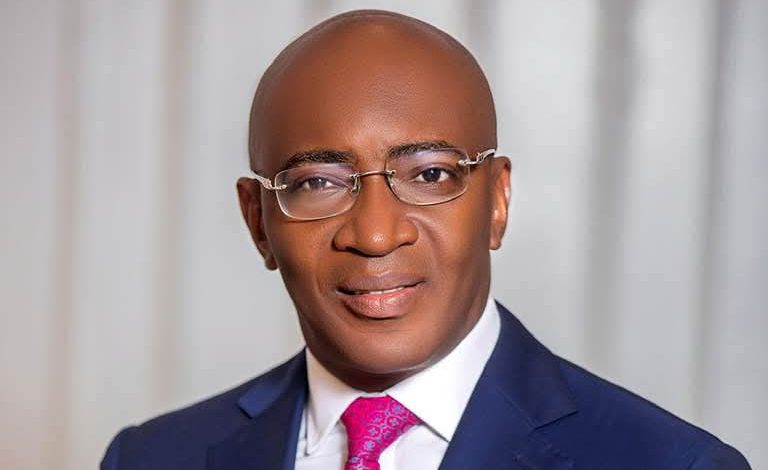
The recent publication concerning the Secretary to the Akwa Ibom State Government, Prince Enobong Uwah, in The Guide Newspaper of Wednesday, September 9, 2026, readily comes to mind.
The publication, boldly captioned “Who is Akwa Ibom State Governor?” and followed by “As Enobong Uwah declares self-de facto Governor of A’Ibom,” goes beyond ordinary political commentary. It creates an impression of a parallel centre of authority and an emerging contest for political control of the state.
The accompanying claims that council chairmen, members of the House of Assembly, commissioners, governor’s aides, APC chairmen and other stakeholders have pledged loyalty to the SSG, alongside the suggestion that he has turned his residence into a “political Mecca”, further reinforce that impression. But is this truly the Enobong Uwah that those who know him have experienced?
My intervention on this matter is not intended to attract unnecessary attention or engage in a media confrontation. It is simply to disabuse the minds of members of the public who may accept the narrative without interrogating its basis.
The power of the press is enormous. This is why every journalist and contemporary commentator carries a corresponding responsibility to ensure that information released for public consumption is guided by professional ethics, fairness and a commitment to truth.
Political narratives, particularly in the period preceding an election year, can easily be amplified beyond their original intent. But speculation should not be elevated into fact, and political permutations should not be presented in a manner capable of creating a crisis where none exists.
For those who have had the opportunity to interact with Prince Enobong Uwah, the picture painted by the publication is difficult to reconcile with the man we know. Uwah has consistently demonstrated humility, discipline and commitment in the discharge of his responsibilities. More importantly, since assuming office as Secretary to the State Government, he has remained actively engaged in interpreting and implementing Governor Umo Eno’s vision under the Arise Agenda.
His office is one of coordination and support within the administration. To therefore portray the SSG as a rival or alternative centre of government without substantiated evidence is not only misleading but capable of creating an unnecessary perception of division at the highest level of the state administration.
That, to yours truly, is where the publication amounts to a pure misrepresentation of Enobong Uwah, for a man who is widely known as a dedicated political appointee, ever willing to contribute his quota meaningfully and deploy his abilities and available resources in service to the people.
It’s worthy of note that Akwa Ibom is presently at a point where stability, continuity, and focused governance are more important than manufactured political tension. Governor Umo Eno and Prince Enobong Uwah have clearly defined responsibilities within the administration, and what should matter to the people is how effectively those responsibilities are discharged for the greater good of the state.
It is understandable that as the 2027 political season approaches, different interests and interpretations will emerge. But political competition should not become a justification for narratives that seek to place individuals against one another without credible basis.
The peddlers of such narratives should therefore exercise restraint and desist from anything capable of distracting the governor and his team from the business of governance.
The media is too important to be reduced to an instrument for sowing disunity. Its greatest strength is not merely its ability to command attention but its responsibility to distinguish between fact, interpretation and speculation.
Prince Enobong Uwah should therefore be judged by his conduct, his record of service and the responsibilities entrusted to him and not by a narrative that seeks to portray him as something he has neither declared himself to be nor demonstrated himself to be.
The Enobong Uwah that Akwa Ibom people know is not a de facto governor. He is the Secretary to the State Government, committed to his duties and to the administration he serves, and that distinction matters.