Interrogating NDDC’s Inter-Commission Alliance With Ministry Of Regional Development Commissions
by Substance Udo-Nature
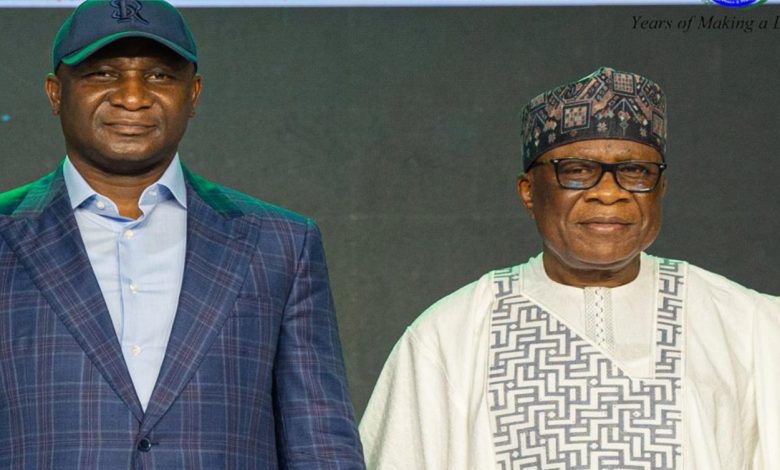
The recent alignment of concepts and models between the Ministry of Regional Development Commissions (MRDC) and the Niger Delta Development Commission (NDDC) is highly welcome. Amongst other things, the formal alliance will boost mutual trust and interest and reinforce the principle of comparative advantage in driving particular and collective policies.
The MRDC is headed by Mr Abubakah Momoh, while the chair of the Governing Board of the NDDC is Mr Chiedu Ebie, with Dr Samuel Ogbuku as managing director. About a week ago, precisely between April 16 and 18, 2026, the Ministry of Regional Development Commissions organised a retreat, held at the Victor Uwaifo Creative Hub, Benin City, Edo State. Chaired by Abubakah Momoh, the three-day event had an interesting and instructive theme: Generating Fresh Ideas to Unlock the Potential of the Regions.
To achieve this, the Commission shall incorporate support from international partners like the United Nations Development Programme (UNDP). For proper tracking of funds by way of financial discipline, they will also adhere religiously to the federal government’s Treasury Single Account (TSA).
Highlighting the meat of the retreat, Mr Victor Ewafe, director of Planning and Research at the Ministry of Regional Development Commission, listed it to include a review of the Commission’s Establishment Acts and adoption of the draft National Policy on Regional Development.
The NDDC is a Nigerian federal agency established in 2000 by the President Olusegun Obasanjo administration with a mandate to foster development, infrastructure and empowerment in the oil-rich Niger Delta region. It is led by the MD/CEO, Chief Samuel Ogbuku. Whereas the Ministry of Regional Development Commissions was created by President Bola Tinubu in October 2024 to replace the Ministry of Niger Delta Affairs, which was the brainchild of late former President Umaru Yar’adua, on September 10, 2010.
Read Also: Commissioning Of Akwa Ibom NDDC Permanent Office Imminent -State Rep. Nkono
The Ministry of Regional Development Commissions is a pivotal instrument for creating and spearheading the government’s plans and programmes for the rapid socio-economic development of regional development commissions across the six geopolitical zones of the country: South South Development Commission (SSDC); South East Development Commission (SEDC); South West Development Commission (SWDC). Others are the North East Development Commission (NEDC), North Central Development Commission (NCDC), and North West Development Commission (NEDC).
However, as it is the primary focus of this page and the Crystal Express Newspaper, the NDDC was the cynosure of the Abubakar Momoh-inspired Edo retreat. For it was during the meeting that the NDDC secured a special collaborative engagement that will improve its services to the Niger Delta region. In other words, a performance bond was to be signed to ensure effectiveness, with a focus on delivering tangible, life-touching and sustaining projects that will transform the landscape and improve the standard of living in a region largely characterised by infectious and intractable poverty.
Ewache further hinted that a draft National Policy on Regional Development had been unveiled, and a plan was underway to review the Commission’s Establishment Acts to strengthen performance. The communique noted, “Projects will be prioritised based on strategic infrastructure investments that align with the Renewed Hope Agenda.”
According to Ogbuku, who describes the present board of the NDDC as “transformational” as opposed to the past that was “transactional”, NDDC’s recent symbiotic romance with the MRDC has further strengthened its performance muscles and widened its investment scope.
It must be noted that, besides the recent alignment, NDDC has been enjoying robust and consequential collaboration with other strategic partners under the Public-Private Partnership (PPP) to drive project execution.
Ogbuku therefore gave a projection: NDDC will complete the Kaa-Ataba Bridge in Rivers State in July, which is in partnership with Nigeria Liquefied Natural Gas (NLNG). There is also the 29-kilometre Bonny Ring Road with nine bridges. He said the Commission has also collaborated with the Delta State Government and Chevron Nigeria Limited on the 70.75 km Omadino-Okerenkoko-Escravos Road and bridges in the Warri North Local Government Area.
Perhaps the high point in the memory of road projects that won high applause for the NDDC is that, just between 18th and 28th May, 2024, the NDDC commissioned five impactful projects in Abia, Akwa Ibom, Bayelsa, Edo and Ondo states.
He listed the projects as the 9 km Obehie-Oke-Ikpe Road in Ukwa West LGA, Abia State; the 25.7 kilometre Ogbia-Nembe Road in Bayelsa State; a 1x15MVA 33/11KV electricity injection sub-station in Amufi, Ikpoba-Okha Local Government Area, Benin City, Edo State; a 45km double-circuit 33KV feeder line from Omotosho Power Station to Okitipupa, Ondo State; and the NDDC 6km Iko-Atabrikang-Akata-Opulom-Ikot Inwang-Okoroutip-Iwochang Road and 600m Ibeno Bridge in Ibeno LGA, Akwa Ibom State. The MD noted that the NDDC also inaugurated the 9.6-kilometre Abraka-Oben Road in Abraka, Ethiope East Local Government Area, Delta State, in February 2025 and commenced the reconstruction of the Abraka-Agbor Road.
The minister said the establishment of the Development Commissions by the administration of President Bola Tinubu reflected an institutional commitment to the coordinated, targeted transformation of the regions through the revitalisation of critical infrastructure.
Momoh reiterated that the establishment of Regional Development Commissions was borne out of the recognition that our country’s prosperity must be broad-based, addressing peculiar developmental challenges of each region and harnessing their unique potentials.
But Momoh challenged all development commissions: they must be focused, meticulous, and pragmatic to align their vision with the Renewed Hope Agenda of President Bola Ahmed Tinubu.
“For an organisation to excel, its leadership must show the way, and the people behind them must be ready to cooperate.”
Edo State Governor, Senator Monday Okpebholo, toed the same line of advice. Represented by his deputy, Hon. Dennis Idahosa, Okpebholo said the NDDC, and indeed all Development Commissions, must see themselves as special project instruments by President Tinubu to deliver on his promises to regions, hence the need for cooperation and collaboration.
It must be stated without any sentiments or fear of contraction that, of all boards of NDDC that have been produced in recent times, Dr Samuel Ogbuku’s, judged by programmes, impact and reach, can safely boast of being the most focused, pragmatic and visible. “The President has charged us to complete all legacy projects for the benefit of the people of the Niger Delta region,” Ogbuku noted at the retreat.
But there still exist big gaps he must fill to be more distinctive and phenomenal in the comparative scorecard of the NDDC. This will be the principal subject in our subsequent editions.