My grandmother once told me a story. I cannot remember exactly how old I was when she told me, but I remember the lesson. She said there was a man who kept telling his children about a place they would one day get to. He talked about the place so much that the children grew up with a picture of it in their minds, and when the children eventually got there, one of them looked around and asked, “Is this the place you have been telling us about?”
My grandmother laughed when she told me the story. Then she said something quite interesting: getting to a place is not necessarily the same thing as becoming what you hoped that place would be. I thought about that story again on September 23, as Akwa Ibom State turned 39.
Indeed, 39 years is not a small period in the life of Akwa Ibom, a state created from the old Cross River State on September 23, 1987, after years of agitation by its people. For those who fought for it, it was about identity, representation, opportunity and the hope that their people could build something better for themselves. And then came the name that has followed the state to this day, “The Land of Promise”.
For yours truly, there is something about that name that has always interested me. Truth be told, a promise is not quite the same thing as an achievement. When a promise is made, one is saying there is something ahead that one intends to reach.
So at 39, perhaps the question should not simply be whether Akwa Ibom has developed, which of course it has. Anyone who has watched the state over the years can see the difference. What should be more important to us as a people is how much of that promise we have fulfilled and how much is still waiting for us.
Read Also: At 39, Akwa Ibom Should Fly Higher
George Santayana once wrote that “those who cannot remember the past are condemned to repeat it.” It is a line that lives rent-free in the mind of yours truly whenever anniversaries arrive. There is no doubt everyone likes the celebrations, the photographs and the speeches, but we often miss the fact that anniversaries also force us to look backwards before looking forward. And looking backwards at Akwa Ibom means remembering where the state started, the people who led it, the things they attempted and, sometimes, the things they could not finish.
It is worthy of note that the state has been moving from one administration to another since 1987. There were military administrators in the early years, followed by the brief return to civilian rule in the early 1990s and another period of military administration before democracy returned in 1999.
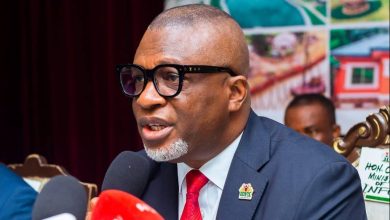
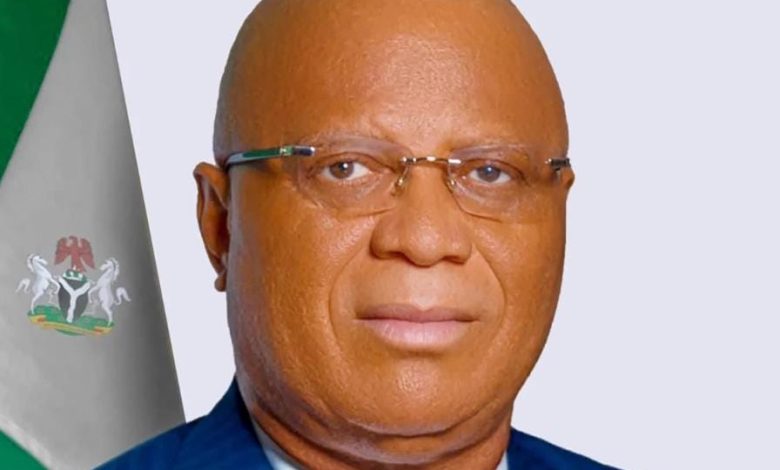
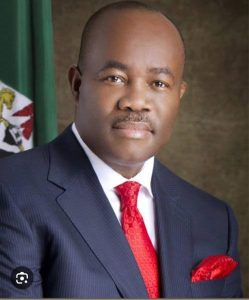
The Fourth Republic opened another chapter in the state’s history, with Victor Attah becoming the first elected governor of the new democratic era, then followed by Godswill Akpabio, Udom Emmanuel and, since 2023, Umo Eno. One thing we cannot dismiss by the stroke of a pen is that each administration came with its own challenges and priorities, and each also left something behind, whether in the area of infrastructure, institutions, economic policy or the general development of the state.
It would therefore be difficult to tell the story of Akwa Ibom at 39 from the democratic era without looking at the different administrations that have, in one way or another, contributed to the journey.
Victor Attah came into office in 1999, at a time when democracy itself was returning to Nigeria after years of military rule. For Akwa Ibom, it was another opportunity to begin thinking about the kind of state it wanted to become. Attah’s years were important in laying foundations and pursuing projects that would later become major parts of the state’s development story.
The Ibom International Airport was initiated during his administration. The Ibom Power project also belonged to that period, as did the Ibom Hotel and Golf Resort and other infrastructure projects. His administration was also associated with efforts around the state’s oil interests and the struggle that eventually produced the change in the onshore-offshore derivation arrangement.
Although some of those projects were not completed during his tenure, the interesting part is that projects can be completed by another administration.
This brings us to Godswill Akpabio in 2007. Since Attah’s period was associated in many respects with laying foundations and pursuing a development vision, Akpabio’s administration became particularly identified with an aggressive physical infrastructure drive. Roads, bridges, flyovers, schools, healthcare facilities and other public projects became highly visible across the state.
The airport project was completed and became operational during his tenure, while other major projects also moved forward. That period also produced some of the landmarks with which Akwa Ibom is still identified today.
Then came Udom Emmanuel in 2015. As Akwa Ibom experienced a significant infrastructure push, Emmanuel brought forward industrialisation as a major part of his economic vision. His administration pursued industries, investment and economic diversification, alongside infrastructure and other areas of development.
While the industrialisation programme became a central feature of his administration, Ibom Air also became an important part of the state’s economic and aviation story.
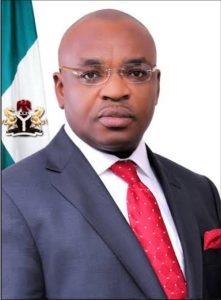
And then Umo Eno in 2023. The Eno administration introduced the ARISE Agenda as its governing blueprint, built around Agricultural Revolution, Rural Development, Infrastructural Maintenance and Advancement, Security Management, and Educational and Health Sector Management, with broader economic and social objectives attached to the programme.
The administration has also mentioned completing inherited projects and maintaining infrastructure built by previous administrations. For yours truly, the important lesson in all of this is that what matters to the people is continuity and sustainable development. Not that every administration has got everything right. It is simply how development works in serious societies.
Interestingly, I came across a phrase some time ago from a gambler called 39 Billion. The phrase was “a moving man will one day meet his luck.” I liked the phrase, but not because life is always that simple. In fact, in reality, moving does not mean that you will meet luck. But one thing is certain: staying in one place guarantees that you will continue to see only what is immediately around you. And more so, there is something to be said for movement, and Akwa Ibom has certainly moved.
Even the state’s own 39th anniversary message this year described the journey as one from a state whose founders inherited a dream rather than a finished product.
However, movement should not be confused with arrival. This is where the name Land of Promise becomes even more interesting. Getting to a place is not necessarily the same thing as becoming what you hoped that place would be. Akwa Ibom has arrived. Now, the greater task is to become. We have to keep working towards that promise as we look back in gratitude.
Most importantly, we should remain committed to becoming better than where we are today, because there are still greater things to achieve. After all, a moving man will one day meet his luck. Happy 39th anniversary, Akwa Ibom. The Promise Land is still moving.
-Dopse Eberefiak writes in from Uyo, 08125649698.