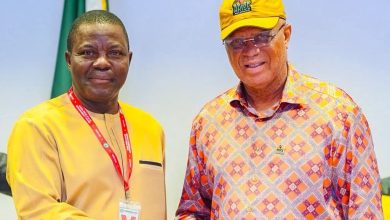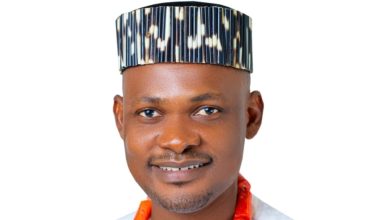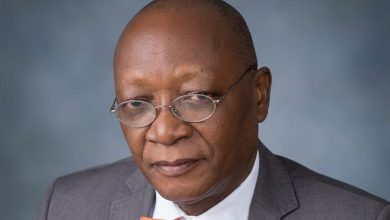

On Thursday, April 23, 2026, the Southern Nigeria Traditional Rulers Council held a high-level roundtable session at Galaxy La Palm Royal Resorts, Abacha Road, Port Harcourt, Rivers State.
The meeting, which was declared open by the Governor of Rivers State, Sir Siminalayi Fubara, was chaired by His Imperial Majesty, Oba (Dr) Adeyeye Enitan Ogunwusi, Ojaja II, CFR, Ooni of Ife, with HRM Eze (Barr) Onyekachi Amaonwu serving as co-chairman.
Eminent traditional rulers who attended the session were Oku Ibom Ibibio and President-General of the Akwa Ibom State Supreme Council of Traditional Rulers, His Eminence, Ntenyin (Dr) Solomon Daniel Etuk, CFR; HRM Eze Cletus Ilomuanya, Obi of Obinugwu; Oba Rashidi Ladoja, Olubadan of Ibadanland; and HRM Eze Chike, Worlu Wodo, Eze Oha Apara IV, among others.
The inauguration of the forum on July 30, 2024, in Owerri, Imo State, to unify traditional leadership across the South-West, South-East, and South-South regions remains top-notch. The council aims to promote peace and foster collaboration as well as create a unified, coordinated platform for Southern traditional rulers.
As rightly conceptualised, the Southern Nigeria Traditional Rulers Council occupies a pivotal position in Nigeria’s socio-political architecture as an institution that harmonises cultural heritage with contemporary governance. In an era marked by centrifugal tendencies and socio-economic challenges, the Council serves as a stabilising force for the southern region and, by extension, the Nigerian federation.
Traditional rulers embody the historical continuity and cultural identity of their communities. Across Southern Nigeria — encompassing the diverse kingdoms and chiefdoms of the South-South, South-East, and South-West — these institutions command profound moral authority and public trust.
The Council aggregates this dispersed authority into a unified platform, affirming that cultural diversity should serve as a foundation for national cohesion rather than a source of fragmentation. A collective articulation of policy and values by the Council reinforces national integration and discourages sectionalism.
Long before the intervention of formal security structures, traditional rulers had functioned as custodians of communal harmony and arbiters of local disputes. The Southern Nigeria Traditional Rulers’ Council institutionalises this role at the regional level, providing a structured mechanism for conflict prevention and resolution.
Through engagement with state governments, security agencies, and civil society organisations, the Council facilitates dialogue and de-escalation, thereby mitigating tensions over land, chieftaincy, and communal relations. This proactive engagement contributes materially to the preservation of public order and the protection of lives and property.
Beyond ceremonial functions, the Council serves as an instrument for advocacy on matters of education, health, economic development and social welfare.
Traditional rulers possess direct access to the grassroots and can mobilise citizenry in support of developmental policies and programmes. The alignment of traditional institutions with state-led initiatives, such as social investment schemes and infrastructure development, ensures policy implementation that is both inclusive and culturally sensitive. This partnership enhances service delivery and fosters sustainable development at the community level.
The Southern Nigeria Traditional Rulers Council reinforces Nigeria’s federal character by articulating the interests of the South within the broader national discourse in a manner that is responsible and constructive. It demonstrates that traditional institutions can complement constitutional democracy rather than operate in opposition to it. In doing so, the Council provides a model for national integration in which heritage and modernity are not mutually exclusive but mutually reinforcing.
The enduring significance of the Southern Nigeria Traditional Rulers Council lies in its capacity to translate cultural legitimacy into civic responsibility. It is an instrument of unity, a guardian of peace, and a catalyst for progress. For Nigeria to realise its developmental aspirations, it must fully integrate all legitimate institutions — statutory and traditional — into the framework of governance.
The Council represents that integration in action, and its continued strengthening is imperative for the stability and prosperity of the nation.
As amplified by the chairman, His Imperial Majesty, Oba (Dr) Adeyeye Enitan Ogunwusi, Ojaja II, CFR, Ooni of Ife, at its inaugural session, “In unity, there is a lot of strength in it; in unity, we can achieve so much; in unity, we can actually work towards how the country can be better.”
It is known that traditional rulers are the closest to our people and must therefore stand for them and work towards the betterment of our people and country.