PREAMBLE
Democracy, as defined by Abraham Lincoln and popularly accepted globally, is “government of the people, by the people and for the people”.
By the above clear and unambiguous definition, the simple takeaway from this definition is that democracy thrives with the full participation of the people. It means, in essence, that the people are the bedrock of democracy. Through their votes, leaders are elected at all levels. By popular sovereignty, it means that the people are the source of political authority. Democracy thrives on the power of the people to make free choices without coercion.
But can the above be said to be the case today in our country vis-a-vis its component states? What is the place of the people in our current brand of democracy? Do the people really matter beyond lining them up to have them most times vote for those they don’t even know or believe in? Have we truly practised this democracy in line with its letters and spirit? Can we truly be proud of what we have been able to do under this democratic experiment in the last 27 years? The questions indeed are legion; but where lie the answers?
Beyond the pointing of accusing fingers at our politicians, many institutions have been caught in the web of aiding and abetting the basterdization of elections. For money, many have sold their conscience, sometimes on the cheap, to the detriment of the people. I’ll attempt at mentioning just a few of such institutions that are key to our democracy, but that have sadly fallen prey to the whims and caprices of desperate political players.
POLITICAL PARTIES
The Constitution of the Federal Republic of Nigeria, as amended, has no room for independent candidacy. If it did, maybe some Nigerians who are desirous to serve in one capacity or the other would gladly present themselves to be voted for by the masses.
This would be considered a better option in a way given the sheer abracadabra that has characterised party politics in Nigeria today. Sadly, internal democracy has become an alien phenomenon in many political parties today. It has become so bad that there is no room for members who wish to aspire to any position to even have the opportunity to do so. Sometimes, forms are not even printed for some offices. In some cases where forms are printed, their location of sales is not accessible to all members, but only known to those that the system has anointed and adopted. So, political parties have become a place where democracy is first of all killed before it transitions to the general elections for its actual burial. In political parties today, governors are lords of the manor. Their word is law. Everyone kowtows to them. When they sneeze, everyone catches cold. So, once the governor’s body language tilts towards a particular aspirant, every other ambition goes underground. He is the leader of the party, hence no one dares challenges him by contesting against an aspirant he has anointed, even if subtly. Others not favoured are expected to accept it in good faith and remain loyal party members for the sake of peace and party cohesion.
Read Also: Electricity Regulatory Commission, Electrification Agency Underway In A’Ibom – Gov Eno
Sadly, the current ruling party, the APC, has not learnt from what happened to the PDP. During their time in power, impunity and imposition at a point became second nature to them. Rules were broken with reckless disdain; a few overlords ran the party as though it was their personal estate! Things were done in total disregard to the feelings of the people. Today, the APC is toeing the same path. Well, this may be understood from the backdrop that most of those carrying broom today were carriers of umbrella not long ago. So, it’s only a change of what they hold by their right hand and nothing at all to do with how parties are run. The same character.
But this impunity has led, more often than not, to the emergence of incompetent candidates who emerge through the benevolence of few powerful stakeholders to the exclusion of other party members who can only swallow hook, line and sinker the decision of stakeholders with frowned faces! So, one of the places we have lost it democratically is political parties. Once we get it right here, no matter the measure, it can set off the beginning of some rebirth in our electoral system. Any hope?
INEC
Another pain in the neck of Nigerians today is the Independent National Electoral Commission (INEC), a body tasked with the sacred mandate of conducting elections.
In recent years, for its conduct and all, Nigerians have seemingly lost hope in the electoral body. Issues of false claim of poor network, not keeping to its own guidelines, especially regarding transmission of results electronically, resorting to manual voting, manipulation of results to favour certain candidates and all what not, have contributed to loss of faith in the commission by Nigerians who truly wish to have their votes count.
Since the return to democratic governance in 1999, Nigeria has had INEC chairmen from different regions with each having its fair share of commendations and knocks from Nigerians.
In 1993, Humphrey Nwosu headed the then National Electoral Commission (NEC) and oversaw what to date is regarded as the freest and the most credible election in Nigeria.
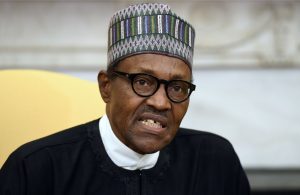
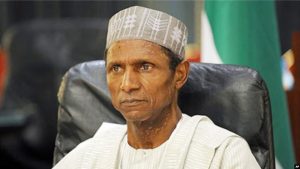
Prof. Maurice Iwu’s conduct of the 2007 elections was widely criticized for widespread rigging and manipulations that painted the country in bad light. The winner of the presidential election, Umaru Musa Yar’Adua of blessed memory, publicly acknowledged that the election that brought him to power was flawed.
Prof. Attahiru Jega who conducted the 2015 elections that saw incumbent President Goodluck Jonathan lose to Muhammadu Buhari of blessed memory introduced the biometric voter registration and Permanent Voter Cards (PVCs). He equally brought in smart card readers to reduce electoral fraud. But the card readers did not fully function in some cases as was expected, hence leading to negative criticisms by Nigerians who had so much hope on the innovation.
It was the turn of Prof. Mahmood Yakubu who presided over the 2023 election.
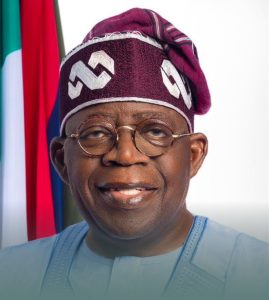
Though credited for expanding vote registration and technology use, his handling of the election was heavily criticized with most Nigerians arguing that the outcome did not reflect the actual votes of the people. It is therefore unsurprising that Nigerians raised eyebrows when he was appointed an ambassador by the current President Bola Ahmed Tinubu-led administration.
Enter Prof. Joash Amupitan, the current INEC boss. Though armed with a sound academic qualification, he has already come under fire by Nigerians who allege that he has links with the APC. Many have already called for his replacement, further casting doubts over his credibility. This has already created uncertainty in the minds of a voting public that is desperate to have their votes count in 2027. Can Amupitan brush off the doubts over his ability to conduct a free and fair election and deliver an election that his conscience will be proud of? Can he be the unbiased umpire that will salvage Nigeria from years of electoral abracadabra? The answer is in the womb of time.
JUDICIARY
The judiciary, touted as the last hope of the common man, has also come under scrutiny for its contributions to Nigeria’s democracy. Conflicting judgments, some of which appear to be financially induced, have not helped us.
Even some judgments in recent times have continued to shock fellow legal minds. Most cases have been won on technicalities than merit. Today, the power to elect has now been transfered to the judiciary, or so it seems. Some governors are in office today because the courts pronounced them so. There is nothing wrong to seek redress if one feels slighted, but when politicians deliberately rig election and then openly tell their opponents to go to court, then it begs the integrity question about the judiciary. If our democracy must survive, the judiciary must play a key role. Can this body turn a new leaf? Nigerians earnestly hope and pray so.
SECURITY
Security agencies have equally played roles in our democratic experiment that have left much to be desired. Rather than provide safety for voters and ensure that unwanted elements do not disrupt voting, some of our security agents have sadly been used to protect cover for politicians to rig and manipulate their way to victory. Sometimes, they excort voting materials to the residence of politicians where wanton manipulation is done. This is unfair because with rifles in their hands, they evoke fear. No one can dare challenge them when seen in such acts for fear of being shut and killed. But if our democracy must move from its present sorry state to where sane Nigerians expect, then there must be real reforms in our security architecture. If they refuse to lend themselves to be used by politicians and work for the interest of Nigerians, we’ll all be the better for it.
CONCLUSION
As we gear up for another election, Nigerians expect real change in the electoral system. At a time were voter apathy remains a major problem here, we must do all we can to ensure that there are assurances that votes will count. And that the will of the people, as expressed in the ballot will stand and not subjected to human alterations and manipulations.
Let us also ensure that we allow a multiple party system to thrive so that Nigerians will have options to choose from at the ballot. Rather than spare no effort to destroy opposition parties, let’s expend same energy to build a better and more prosperous country.
Let the component states and local governments stand up and be counted. There’s so much money now in the hands of local government chairmen; they should show working by ensuring that governance at the local level addresses the needs and meets the expectations of rural dwellers.
Enough said!