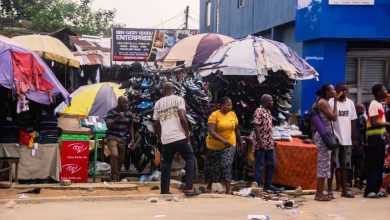

Across much of Nigeria, governments have traditionally measured economic progress through roads, bridges, public buildings and other physical infrastructure.
While these investments remain essential, a growing body of economic research suggests that long-term prosperity depends equally on the strength of private enterprise. Economies grow faster and become more resilient when governments create conditions that enable entrepreneurs to build businesses, generate employment and expand local production.
This philosophy is increasingly shaping economic policy in Akwa Ibom State. Since assuming office in May 2023, Governor Umo Eno has pursued an approach that seeks to connect entrepreneurship, industrialisation, agriculture, transportation and public procurement into a single development framework. Rather than treating business support as isolated empowerment programmes, the administration is building an ecosystem in which skills development, access to finance, manufacturing and government spending reinforce one another.
The objective is straightforward. Public investment should not only provide social services but also create enterprises capable of driving sustainable economic growth.
Governor Eno’s economic outlook is informed by years in private business before entering public office. As founder of the Royalty Group, he built enterprises that created jobs and supported livelihoods across several sectors. That experience has influenced an administration that places considerable emphasis on enterprise development as a pathway to economic expansion.
Related: Governor Eno, Microfinancing and The Roaring Engine of Entrepreneurship
The approach aligns with international evidence. According to the World Bank, small and medium enterprises account for about 90 percent of businesses worldwide and generate more than half of global employment. In Nigeria, the National Bureau of Statistics estimates that SMEs contribute nearly half of the country’s Gross Domestic Product, making them indispensable to economic growth.
Despite their significance, many Nigerian businesses struggle because of inadequate financing, weak institutional support, and limited access to markets. A joint survey by the Small and Medium Enterprises Development Agency of Nigeria and the National Bureau of Statistics found that more than 80 per cent of SMEs operate informally, limiting opportunities for expansion and access to formal credit.
Akwa Ibom’s response has been to address these constraints through coordinated policy rather than isolated interventions.
One of the earliest manifestations of this strategy was the establishment of the Ibom Leadership and Entrepreneurial Development Centre, known as Ibom LED.
Commissioned in September 2023, the centre represents more than a conventional skills acquisition programme.
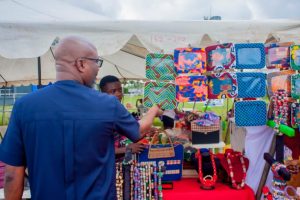
It was conceived as an institution that would identify aspiring entrepreneurs, equip them with practical business knowledge and connect them with financing and regulatory support needed to establish viable enterprises.
The first cohort received a total intervention package of ₦250 million.
While ₦50 million funded entrepreneurial training, ₦200 million was distributed as business grants of ₦500,000 each to 400 participants, enabling many beneficiaries to move immediately from learning to enterprise creation.
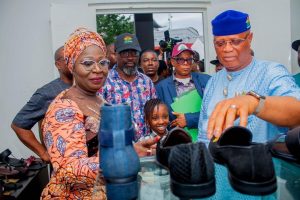
The programme also assists participants with business registration through the Corporate Affairs Commission, product certification through the National Agency for Food and Drug Administration and Control, and financing opportunities linked to the Bank of Industry. By integrating technical training with formalisation and access to capital, the state is attempting to improve business survival beyond the early stages of enterprise development.
The initiative has continued to expand. By early 2025, more than 1,200 entrepreneurs had completed the programme, forming a growing network of business owners expected to benefit from mentorship, collaboration and investment opportunities.
The administration subsequently moved beyond training to broader enterprise financing.
In 2025, the state approved ₦550 million in grants supporting women entrepreneurs, creative businesses and emerging enterprises across different sectors.
Additional interventions provided productive equipment and mobility assets to more than 2,000 entrepreneurs engaged in tailoring, welding, catering, hairdressing and other vocational trades.
Development economists have long argued that productive assets significantly improve business performance by reducing entry barriers and increasing income-generating capacity. Rather than providing temporary relief, such interventions enable beneficiaries to establishto support women entrepreneurs, creative businesses, and emerging enterprises across sustainable businesses capable of employing others and contributing to local economic activity.
Perhaps the most distinctive feature of Akwa Ibom’s economic model is its deliberate use of government purchasing power to strengthen local enterprise.
Businesses trained and supported under Ibom LED are increasingly participating in government procurement. School uniforms, security uniforms, catering services and other public contracts are gradually being sourced from local entrepreneurs, ensuring that public expenditure circulates within the state’s economy instead of flowing to suppliers outside Akwa Ibom.
This approach reflects international best practice. The Organisation for Economic Cooperation and Development has consistently observed that strategic local procurement policies stimulate domestic production, encourage business expansion and generate multiplier effects that strengthen regional economies.
Manufacturing has also become an important pillar of the administration’s economic strategy.
The revival of the former Peacock Paint factory in Etinan illustrates this direction. Renovated and recommissioned as Ibom Paint under the Akwa Ibom Investment Corporation, the facility has resumed production after years of inactivity.
More importantly, the state has prioritised the use of locally manufactured paint in government construction projects. By combining industrial revival with guaranteed market demand, the administration is attempting to rebuild manufacturing capacity while creating opportunities for suppliers, distributors and supporting enterprises within the local economy.
The state intends to extend this industrial strategy through the Dakkada Industries initiative. Facilities producing tissue paper, pencils, tomato paste, plastics and other consumer products are undergoing rehabilitation as part of efforts to diversify industrial production and reduce dependence on imported goods.
Economic analysts frequently describe manufacturing as one of the most effective sectors for job creation because of its extensive value chains linking suppliers, logistics providers, retailers and service businesses. For Akwa Ibom, industrial revival therefore complements entrepreneurship development by creating additional markets for local enterprise.
The entrepreneurial vision is also expanding into sectors that improve the wider business environment.
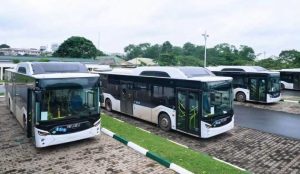
Recently, the state received the first 20 compressed natural gas buses from an order of 50 buses expected to serve communities across all 31 local government areas. Construction is progressing on a central bus terminal, bus stations, an integrated ticketing system and supporting transport infrastructure designed to deliver efficient and affordable public transportation.
Although transportation is often viewed primarily as a social service, economists recognise it as a critical driver of business productivity. Efficient transport systems reduce operating costs, improve access to markets and facilitate the movement of workers, goods and services. For entrepreneurs and small businesses, reliable transportation can significantly improve competitiveness.
Agriculture is undergoing a similar transformation.
The state recently transferred the management of the Ibom Model Farm to Akwa Ibom State University, while the Ministry of Agriculture retains supervisory oversight. The objective is to transform the facility into a centre for agricultural research, innovation, practical training and agribusiness development.
Beyond increasing food production, the model farm is expected to support commercial agriculture, agritourism and technology-driven farming practices. The government has also announced plans to establish similar facilities across the state’s three senatorial districts, broadening opportunities for agricultural entrepreneurship and strengthening food security.
The partnership with the university reflects a deliberate effort to connect academic research with commercial enterprise, ensuring that innovation contributes directly to economic productivity.
Youth development remains central to the broader strategy.
Nigeria possesses one of the world’s youngest populations, making employment creation an urgent national priority. Akwa Ibom has sought to respond by expanding access to entrepreneurship programmes and financial support for young people and women, recognising that inclusive economic participation is essential for sustainable growth.
Although the full impact of these initiatives will become clearer over time, the policy architecture is already visible.
Entrepreneurship training, access to finance, manufacturing, transport infrastructure, commercial agriculture and public procurement are increasingly functioning as interconnected elements of a broader economic strategy rather than isolated government programmes.
The long-term success of the model will depend on whether these enterprises continue to innovate, attract private investment and compete successfully beyond government patronage. That remains the defining test of every entrepreneurship-driven development strategy.
Even so, the direction is becoming increasingly evident.
Akwa Ibom is gradually repositioning the role of government from that of a provider of temporary assistance to that of a catalyst for enterprise, industrial growth and private sector expansion. If sustained, the model could provide valuable lessons for other subnational governments seeking to translate public investment into inclusive economic development, durable employment and long-term prosperity.
Ekaette Okon Joseph is the Special Assistant on Media to the Governor of Akwa Ibom State.