
The commencement of international flights at airports across the globe has always been regarded as a defining symbol of infrastructural advancement, economic readiness, and global integration. It is a transition that transforms an airport from a domestic transit point into an international gateway connecting people, businesses, cultures, and economies across borders.
This is why the maiden international flight by Ibom Air from the new Smart Terminal Building of Victor Attah International Airport, Uyo, to Kotoka International Airport, Accra, Ghana, scheduled for May 2, 2026, stands as a historic milestone for Akwa Ibom State and the South-South region of Nigeria.
Across the world, the inauguration of international flight operations signifies far more than the movement of aircraft. It represents economic expansion, investor confidence, tourism development, institutional maturity, regional competitiveness, and global visibility. For Akwa Ibom State, the Uyo–Accra route embodies all these possibilities and even more.

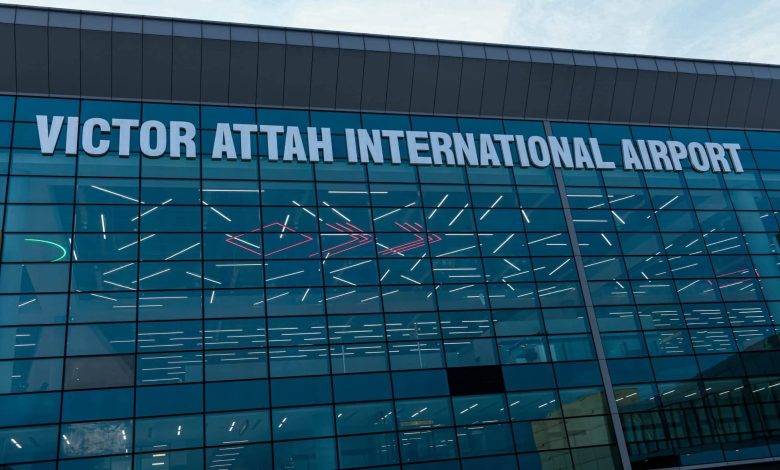
What makes this development particularly unique is that the flight will depart from the newly completed Smart Terminal Building at Victor Attah International Airport, a facility widely regarded by aviation stakeholders as one of the most technologically advanced airport terminals in Nigeria.
Although the airport had witnessed international pilgrim flights during the administration of former Governor Senator Godswill Akpabio in 2010, and Ibom Air itself has operated international services from Lagos to Ghana since 2023, this marks the first direct international flight by Ibom Air from Uyo through the new Smart Terminal Building. That distinction alone places this moment firmly within the annals of Akwa Ibom’s aviation history.
Related: Arise Palm Resort: A Mind-Blowing Tourism Booster For Victor Attah Int’l Airport – Festus Keyamo
The significance of the development begins with the transformation of Victor Attah International Airport from a predominantly domestic airport into a true regional aviation hub. International airport operations require rigorous standards involving immigration and customs services, international aviation security, passenger processing systems, navigation infrastructure, and strict compliance with global operational protocols. The commencement of the Uyo–Accra route demonstrates that the airport has attained the institutional and infrastructural capacity required for international aviation operations.
This achievement reflects years of investment, planning, and strategic vision aimed at positioning Akwa Ibom within regional and global aviation networks.
Beyond the flight itself, the Smart Terminal Building has emerged as one of the strongest symbols of Akwa Ibom’s infrastructural evolution. Designed as a modern aviation facility driven by smart technology, automation, efficiency, and passenger comfort, the terminal reflects the ambition of a state deliberately positioning itself for the future.
The Project Director of the Consultants to the Terminal Building, Architect Daniel Etteh, revealed that the facility was designed to process over five million passengers annually while ensuring that “no passenger will spend more than five minutes from the point of alighting at the car park to the point of boarding the aircraft”.
That statement alone captures the philosophy behind the facility, speed, convenience, efficiency, and global standards.
The terminal integrates advanced technology and passenger-friendly systems that place it among the most modern airport facilities in the country. It is equipped with four escalators and thirteen elevators, while its acoustic and thermal insulation systems ensure that passengers are protected from excessive aircraft noise and harsh environmental conditions. The building is almost completely enclosed to maximise operational efficiency and enhance air-conditioning effectiveness.
Its smartness is equally reflected in its power infrastructure. According to the Managing Director of the contracting company, Engineer Oliver Ebong, the terminal operates with seven synchronised generators capable of automatically adjusting to the energy demands of the facility at any given time. This guarantees uninterrupted operations and stable energy management for seamless airport activities.
The facility also boasts high-speed internet connectivity and automated systems designed for efficient information processing and passenger management. One of its most defining features is the presence of five air bridges. Two are designated for domestic operations and two for international operations, while the remaining swing bridge can conveniently serve either domestic or international flights, depending on passenger traffic. These features elevate the terminal from being merely an airport building to a sophisticated aviation ecosystem designed for world-class operational performance.
The strategic importance of the Uyo–Accra route further amplifies the significance of this maiden international flight. Kotoka International Airport in Accra is one of West Africa’s busiest and most influential aviation hubs. It serves as a gateway into the sub-region and connects travellers to Europe, North America, the Middle East, and other African countries.
By connecting Uyo directly to Accra, Akwa Ibom is strategically positioning itself within the ECOWAS regional mobility and trade corridor. The route creates easier access for business travellers, investors, tourists, students, diplomats, and diaspora communities while reducing dependence on Lagos and Abuja for regional international travel.
Globally, international airports stimulate economic growth because they improve accessibility and attract investment. The commencement of international flights often triggers expansion in hospitality businesses, conference tourism, logistics and cargo operations, real estate development, and employment opportunities. For Akwa Ibom State, the maiden Uyo–Accra flight aligns perfectly with ongoing efforts to diversify the economy through tourism, commerce, industrialisation, and infrastructure development.
Tourism is another area where the impact of the international route will be strongly felt. Akwa Ibom has steadily positioned itself as a tourism and hospitality destination through investments in roads, hotels, healthcare infrastructure, recreational facilities, environmental beautification, and urban renewal projects. The direct route to Ghana enhances tourism and cultural exchange between two major West African destinations while supporting ECOWAS integration objectives centred on free movement and regional cooperation.
The significance of the maiden international flight also extends to Ibom Air itself. Since its establishment, the airline has built a reputation for operational efficiency, punctuality, safety, and quality service delivery. The transition from domestic operations into direct regional international flights represents a major institutional milestone for the airline.
The Managing Director of Ibom Air, Mr. George Uriesi, described the Smart Terminal Building as a “plug and play” facility capable of supporting seamless international operations. According to him, the terminal will function not only as a destination airport but also as a mediation and transfer hub where passengers can seamlessly connect between local and international flights, an innovation still largely absent in many Nigerian airports.
Ibom Air is already working toward expanding its international destinations beyond Ghana while positioning itself for fleet expansion and operational growth. The planned delivery of additional aircraft, particularly the gradual streamlining toward the Airbus A220 fleet for uniformity and operational efficiency, demonstrates the airline’s long-term strategic vision.
Governor Umo Eno has equally acknowledged the critical support of the federal government in making the international operations possible. The Governor specifically expressed gratitude to President Bola Ahmed Tinubu for approving the international status for Victor Attah International Airport and commended the Minister of Aviation and Aerospace Development, Festus Keyamo, SAN, for his cooperation and commitment toward ensuring that the approval process was completed.
The acknowledgement underscores the importance of collaboration between the Federal Government and subnational governments in driving strategic infrastructure development capable of stimulating economic growth and regional integration.
Historically, inaugural international flights are celebrated globally because they symbolise progress, ambition, institutional maturity, and economic confidence. For Akwa Ibom people, the maiden international flight from Victor Attah International Airport to Kotoka International Airport is therefore far more than an aviation event. It is a statement of progress, a symbol of vision, and a reflection of infrastructural transformation.
Perhaps nothing captures the economic significance of aviation better than the words of the late Air Commodore Idongesit Nkanga, who famously noted that “aviation is a money churner”. Indeed, aviation has become to some nations what oil is to others. Through strategic aviation investments and expanding international connectivity, Akwa Ibom is gradually positioning itself within that economic trajectory.
Ultimately, the maiden international flight by Ibom Air from Victor Attah International Airport, Uyo, to Kotoka International Airport, Accra, Ghana, is not merely about aircraft taking off and landing. It is about opening new economic frontiers, strengthening regional integration, enhancing tourism, attracting investment, stimulating development, and projecting Akwa Ibom confidently onto the international stage.
Akwa Ibom is truly taking off, and this time, the world is watching.
Charles Akpan writes from Ikot Eda in Anua Offot, Uyo Local Government Area of Akwa Ibom State.