Women’s Political Awakening In Akwa Ibom: Opportunities And Structural Barriers Ahead Of 2027
“Diane Mariechild, writer and women’s advocate, once observed that “a woman is the full circle; within her is the power to create, nurture and transform.”
This assertion profoundly reflects the inherent strength and transformative capacity of women in the society.
It is on this awareness that Akwa Ibom State has built a respectable track record of women’s inclusion in both politics and governance, one that places it ahead of many Nigerian states from 1999 to date.
This trajectory presents a narrative of undeniable advancement, tempered by persistent structural challenges, which is why the “35% Affirmative Action” remains a matter of unresolved public discourse.
Before delving into those entrenched structural barriers and women’s preparedness for the 2027 general elections, it is important to highlight women who have exercised substantive authority within the executive, the legislature and local government areas.
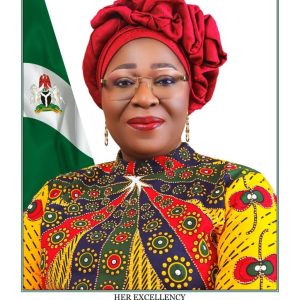
At present, Senator Akon Eyakenyi serves as the deputy governor of Akwa Ibom State, while four women occupy strategic positions within the State Executive Council.
Read Also: Women’s Political Participation Gets Major Boost With Unveiling of “Empower Her Project“
Among them are Mrs Inibehe Silas Etukudo, commissioner for women affairs and social welfare; Dr Offiong Offor, commissioner for agriculture; Princess Emem Ibanga, commissioner for humanitarian affairs; and Rt. Hon. Alice Ekpenyong, all of whom hold significant portfolios in the administration.
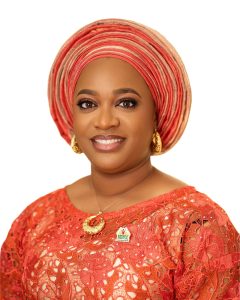
Interestingly, the state’s civil service structure is also headed by a woman, Mrs Elsie Anietie Peters, who currently serves as the Head of Service.
In the legislature, there are four women lawmakers, namely, Rt. Hon. Precious Selong Akamba (Urue Offong/Oruko); Dr Itorobong Francis Etim (Uruan); Hon. Kenim Onofiok Victor (Oron/Udung Uko); and Hon. Selinah Ukpatu Isotuk (Ikot Abasi/Eastern Obolo).
This represents a doubling from the two women who served in the 7th Assembly.
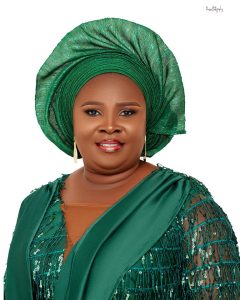
In the Senate, women such as Senator Eme Ufot Ekaette (Akwa Ibom South, 2007–2011), Senator Helen U. Esuene (Akwa Ibom South, 2011–2015) and Senator Akon Etim Eyakenyi (Akwa Ibom South, 2019–2023) left remarkable footprints through their representation and service.
Similarly, in the House of Representatives, Rt. Hon. Owoidighe Ekpoatai represented Eket/Onna/Esit Eket/Ibeno Federal Constituency between 2015 and 2019, further demonstrating the capacity of Akwa Ibom women to hold high their head in legislative leadership.
The October 2024 local government elections produced five female chairpersons out of the 31 local government areas in Akwa Ibom State. They include Mrs Otobong Sunny Aaron of Nsit Ibom, Mrs Ime Effiong Charles of Abak, Mrs Otobong Okon Essien of Ikono, Mrs Uduak Ikemesit Ikot of Esit Eket, and Mrs Glory Ekah of Ibeno.
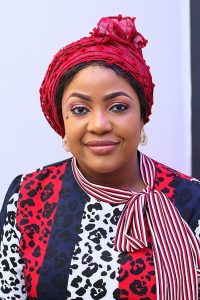
In further demonstration of his administration’s commitment to gender inclusion, Governor Umo Eno also mandated the appointment of female vice chairpersons across the remaining 26 LGAs, thereby expanding women’s participation and visibility at the grassroots level of governance.
Women’s Activism: Demanding Representation, Not Just Inclusion:
When women’s inclusion is genuinely defined, what should it truly represent?
Should it merely revolve around symbolic inclusion, or should it focus on meaningful representation, influence and active participation in governance and decision-making circles?
Just as highlighted earlier, women serving as commissioners are only four out of 27 members in the Akwa Ibom State Executive Council.
This stands at approximately 14.8 per cent of 100, revealing a figure that remains significantly low and reflects gender imbalance in executive appointments.
While women have gained visibility within the Executive Council, the concentration of major political and strategic power still tilts heavily toward men.
Beyond the executive, is the legislature where women are just four out of 26 members in the 8th Assembly.
This represents a doubling from the two women who served in the 7th Assembly.
But should this doubling be applauded, or should it instead prompt sober reflection and actionable involvement?
Four women out of 26 legislators is 15.4 per cent, this is barely above tokenism. This exposes the fact that over the decades, Akwa Ibom women have remained under-represented in the legislature.
Even when women are included, they are often less-powerful, less-engaged or influential due to their low numerical strength.
There is no doubt that this issue stems from the structural and cultural factors, where political godfathers, deep pockets and patriarchal gatekeeping determine who gets what.
No matter what happens, the political matadors and cabals in parties such APC, PDP, Labour Party, YPP, among others, always have the final say on preferred or anointed candidates.
At this stage, as statistics repeatedly has shown, most women are likely to be relegated to the background.
The under-representation of women in the state’s political structure is also felt at the local government area level, where five females emerged as council bosses out of 31.
This 16 per cent may champion gender inclusion while underrating substantial female representation in grassroots governance.
Although the governor mandated 26 female vice chairpersons across some local government areas, this also reveals a pattern of executive dependency that could hinder the long-term growth of independent female political participation and leadership.
This reality further emphasises the need for women’s activism to move beyond symbolic inclusion toward demanding genuine representation through electoral competitiveness, political visibility, grassroots mobilization and active participation in party structures.
For this to work, women must be intentional about contesting actual elections rather than absolutely relying on executive figures for sympathetic appointments as a means of political relevance and appeasement.
Observable Preparedness: The 2026-2027 Election Cycle
As the 2027 election approaches, Akwa Ibom women stand at a crossroads, with growing institutional presence, civic consciousness and activist energy shaping multiple possible political trajectories.
This preparedness became evident between February and March 2026 during the women sensitization tour led by Dr Akon Eyakenyi across the 31 local government areas, where women were encouraged to secure valid Permanent Voter Card (PVCs), register eligible voters, obtain National Identification Number (NINs) and actively participate in grassroots political mobilisation.
The campaign also linked civic participation with economic empowerment through initiatives such as the ARISE Cooperative Scheme, while the All Progressives Congress intensified female party registration across the state. This demonstrated a strategic effort to position women not only as voters but as active political stakeholders ahead of 2027.
But beyond this lies an uncomfortable question staring women in the face as the political momentum builds toward 2027.
Are Akwa Ibom women aggressively prepared enough to be taken seriously?
Preparation is not just about enthusiasm. It is not just about showing up at rallies and wearing party colours.
Aggressive preparation is meaningful only when it translates into political power, equitable representation and genuine access to decision-making structures.
And this is where political parties and power brokers are equally prepared to entrust more females with substantive elective positions and strategic leadership roles.
What Akwa Ibom women need is not merely sensitisation campaigns and grassroots mobilisation, but deliberate political structures that will encourage more women to contest elective positions, secure party nominations and gain access to resource control.
This must also be accompanied by assertive women’s activism that demands representation as a right, not a favour.
Consequently, the challenge before 2027 is not about sheer participation, but about transforming participation into measurable political influence and equitable representation.
For many observers and advocates, the 2027 elections may therefore serve as a defining moment for Akwa Ibom women, a test of whether the increasing political consciousness and civic engagement witnessed across the state will culminate in broader inclusion within the architecture of macro political power.
The Challenge for 2027 and Beyond
If Akwa Ibom women are to have genuine relevance in the 2027 elections and beyond, they must undertake a fundamental reorientation of their political consciousness and strategy.
One of the approaches is electoral organisation. This has to do with women investing their time, resources and energy in building electoral machinery, such as registering voters, training campaign teams, raising funds and cultivating constituencies.
This means it is high time women refused to support politics from the sidelines but actively built strong political networks and systems.
Rather than waiting for male politicians to fund their token female candidates, women must build fundraising networks, cultivate business relationships and build loyal grassroots support that can help women win elections.
After all, over the years, Akwa Ibom women have consistently come out in large numbers to exercise their franchise, and this can be used to their advantage.
Another strategy is Independent Power Bases where women create political structures that exist independently of male governors’ goodwill.
This means establishing women’s political caucuses within parties that can negotiate collectively, field candidates strategically and deliver bloc votes reliably.
It is also imperative to note that political parties respond to power, not pleas.
Another reality Akwa Ibom women have to confront is their fear of contesting for governorship positions or seeking representation at both the state and national levels.
The path to electoral power requires risk- taking, competition and one who is willing to accept the risk of defeat. Women must be willing to contest primaries against men, challenge incumbents and endure the bruising realities of electoral combat. Appointments are comfortable; elections are chaotic. But only the latter confers genuine power.
Mentorship is part of the strategies women need in building political structure in the state. This requires that few women who have won elections must deliberately mentor younger women, create pathways from wards level to state level, and establish succession structures that ensure continuity beyond individual personalities.
Until these strategies are carefully layered and acted on, Akwa Ibom women will still struggle to convert their numerical strength, political participation and grassroots visibility into meaningful representation and decision-making power.
Breaking the Dependency Cycle
As 2027 approaches, the observable reality is troubling. The fate of Akwa Ibom women in 2027 will not be determined by executive appointments, but by how many women contest elections, secure party primaries and build independent political capital capable of surviving gubernatorial transitions.
Governor Umo Eno deserves credit for his progressive gender-inclusive appointments, but women must recognise that his benevolence is not a substitute for their political aspirations.
The true test of women’s political maturation in Akwa Ibom is not whether or not enlightened men appoint them, but whether women can organise sufficiently to make their electoral support indispensable and their political marginalisation costly.
Until this changes, women’s place in Akwa Ibom politics will remain what it is today, a dependent variable in equations written by men, not an independent force shaping the state’s political future.
However, the 2027 elections offer a moment of reckoning.
Will Akwa Ibom women continue to celebrate their gilded cage of executive dependency, or will they finally break free and contest for the electoral power that no governor can grant or revoke?
The answer will determine not just their fate in one election cycle, but their trajectory for generations to come.
It is time for Akwa Ibom women to move from pedestrian progress to genuine political power, playing the game from the centre circle rather than from the sidelines that too little justify their big dreams.