Across Nigeria, abandoned public projects represent one of the greatest drains on economic growth. Billions of naira have been invested in infrastructure, industrial facilities, tourism assets, and public institutions that never reached their full potential. The result is not merely wasted money but lost jobs, lost investment opportunities, and diminished public confidence in government.
For many states, the challenge is not the absence of infrastructure. It is the inability to maximize existing investments.
This is why a growing number of development economists now argue that the future of public sector efficiency lies not only in building new projects but in unlocking value from assets already in existence.
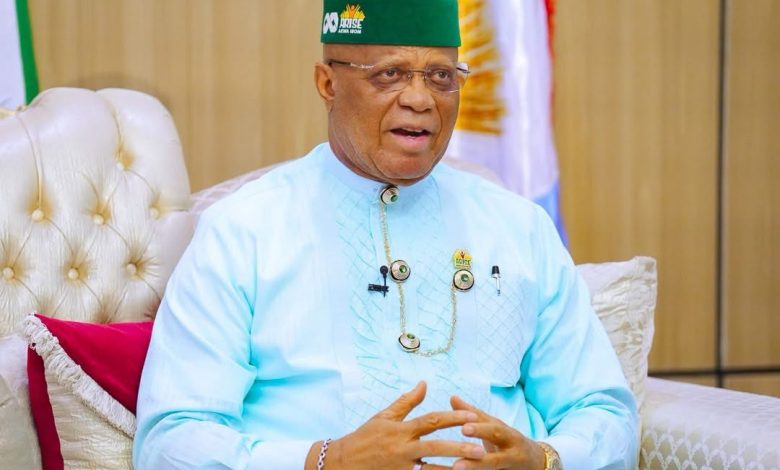
That philosophy is increasingly defining governance in Akwa Ibom State under Governor Umo Eno, Ph.D.
Since assuming office in May 2023, Governor Eno has demonstrated a consistent commitment to ensuring that public investments do not become monuments to abandonment. Rather than allowing state-owned assets to deteriorate, his administration has focused on revitalizing, repositioning, and extracting economic value from them.
Read Also: ARISE Park: Uyo Media Group Applauds Umo Eno
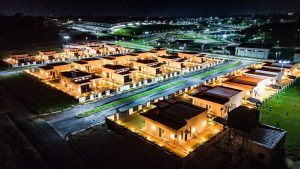
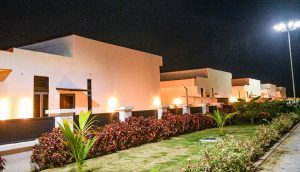
The transformation of the former Ibom Tropicana Entertainment Centre into the Arise Palm Resort offers perhaps the clearest example of this governance approach.

For years, the sprawling facility stood as one of the most ambitious tourism investments in southern Nigeria. The infrastructure existed. The potential was evident. Yet significant opportunities remained untapped.
Where some saw an underutilized asset, Governor Eno saw economic capital waiting to be unlocked.
The decision to reposition the facility as Arise Palm Resort was more than a rebranding exercise. It reflected a strategic effort to integrate tourism, hospitality, entertainment, conferences, and investment promotion into a single economic ecosystem capable of generating jobs, attracting visitors, and stimulating private-sector participation.
The significance of this transformation extends beyond the boundaries of the resort itself.
Tourism remains one of the world’s largest industries, contributing trillions of dollars annually to global economic output and supporting millions of jobs. Countries and regions that successfully leverage tourism infrastructure often benefit from increased spending across transportation, hospitality, retail, entertainment, and real estate sectors.
Akwa Ibom is increasingly positioning itself to participate in that value chain.
The revitalized Arise Palm Resort is creating opportunities for hoteliers, event planners, transport operators, food vendors, artisans, entertainers, and numerous small businesses that depend on visitor traffic.
Every conference hosted generates economic activity.
Every tourist visit supports local businesses.
Every investment in the facility creates additional opportunities within the wider economy.
This multiplier effect is precisely what governments seek when pursuing sustainable development.
More importantly, the project reflects a deeper understanding of governance.
Development is not always measured by the number of new projects commissioned. Sometimes it is measured by how effectively existing assets are managed.
Across the developing world, governments are increasingly recognizing that infrastructure maintenance and asset optimization can deliver returns comparable to new capital projects, often at significantly lower costs.
This is where the Arise Palm Resort story becomes instructive.
Rather than committing scarce public resources exclusively to new ventures, the Akwa Ibom State Government chose to maximize the value embedded in an existing investment. The result is a facility that is gradually evolving into a destination for business, leisure, entertainment and tourism.
The philosophy behind this approach aligns closely with the governor’s ARISE Agenda, particularly its emphasis on infrastructure advancement, wealth creation and sustainable economic growth.
It also sends a strong signal to investors.
Investors are attracted to environments where governments demonstrate continuity, protect public investments, and pursue policies that enhance the value of existing infrastructure. Such actions reduce uncertainty and reinforce confidence in the broader economic direction of a state.
Perhaps the most enduring lesson from the Arise Palm Resort experience is that leadership often determines whether public assets become liabilities or engines of growth.
Infrastructure alone does not create prosperity.
Vision does.
Buildings alone do not generate wealth.
Purposeful management does.
The true measure of governance is not merely the ability to initiate projects but the capacity to ensure that projects deliver value long after construction ends.
As Akwa Ibom continues its development journey, the transformation of Arise Palm Resort stands as evidence that economic growth can emerge not only from what the government builds, but also from what it preserves, revitalizes and optimizes.
In an era of limited resources and growing development demands, that may be one of the most important lessons in public administration.
Nothing is a waste when leadership understands its value.
Godwin Edet is a Personal Assistant to the Governor of Akwa Ibom State on New Media and writes from Uyo Local Government Area.