
Introduction
Over the past several years past governments in Akwa Ibom State have tinkered with industrialization without a good story to tell. Several factors ranging from infrastructure deficit, non-availability of investment-amenable funding windows, corruption, stifling bureaucratic structure, poor entrepreneurial drive among others account for this failure. Even though this situation is not peculiar to Akwa Ibom State only, it would seem Akwa Ibom’s case is peculiar perhaps because we play too much politics.
The time is propitious for us to re-examine the challenges the real sector faces in the state with a view to addressing them frontally instead of blaming our failure on the federal government alone. It is the responsibility of the government to create an enabling environment and a supporting structure for investment to thrive. Government need not to be directly in setting up business. In fact, existing industries owned and managed by the state should be relinquished to the private sector.
The civil service system cannot pretend to provide the solution to the problems of production. It is NOT cut out for that. The private sector should drive it with support from government and based on a set of incentives and legislations that advance business and check abuses. The legislation should be faithfully pursued and completely FREE from political interference.
This paper focuses on evolving a state-driven industrial policy that can significantly reduce the traps that impede industrial development in the state. The thesis statement is: notwithstanding the wrong macroeconomic policies in place in the country, Akwa can develop its own home-made industrial roadmap.
Truth is, no nation or its parts thereof, can be economically strong without a vibrant industrial sector where machines hum day and night producing goods for local consumption and export. A consumer-oriented state is a frail and an ever dependent one. Production brings prosperity through as it propels commerce logistics and add value to primary production such as agriculture.
This, in part, explains why the economy machinery is slow, unemployment is number is steep, internal revenue remains paltry despite efforts to rave it up. It explains why poverty is rife with too much pressure on government.
Related: A’Ibom Govt Set To Partner With China For Entrepreneurship Development, Agriculture, Tourism, Others
To rapidly grow the industrial sector, it may be wise to adopt a modified version of the Chinese model. Certainly, the Chinese model has worked. There is no need trying to re-invent the wheel; rather we can latch on to what already works albeit with modifications that respond to our peculiar environmental circumstances.
The Foundation
To transition from consumer-driven economy to a genuinely industrialized hub, government must move significantly away from direct state ownership except for specific commanding heights like the Ibom Deep Seaport. Plans should be afoot to divest interest from existing state-run industries. Government should instead remain the core institutional guarantor of the economic ecosystem. Enterprises built with state funds suffer administrative myopia and a terribly toxic culture of non-repayment of the monies invested.
We should evolve a two-pronged structural overhaul of the entire business ecosystem. The first is the development of a transformational industrial blueprint. Then a strong legislation that deter against loan defaulters and graft.
Kick-starting Industrialisation
A viable industrial sector can benefit from three primary operational shifts viz:
1. Divest from existing investments and free the funds for the new dispensation.
2. Move from state ownership to PPP risk mitigation approach.
3. Establish a ring-fenced micro-industrial cluster; and
4. Put in place an operational continuity legislation.
PPP Risk Mitigation
Government should adopt “A functional State Funds as a First-loss Guarantee Capital”. A state industrial fund of N50 billion to N150 billion should be created and managed by third party financial institutions such as the bank of Industry (BOI) and commercial banks. The fund could be raised through:
a. Funds realised from government enterprises where interest is divested. Suggestions on the approach could come later.
b. From the state budget as capex.
c. Float 15-25-year long-term bond.
d. A long term loan from multilateral lending agencies.
But the starting point should be from the budget.
A manufacturer takes a loan under rigorous investment appraisal process. The government guarantees the loan, mitigates interest rate at single digit; not more than 7 percent after banks’ mark-up. Allow 18-to-36-month moratorium. Let repayment term oscillate between 10 to 15 years. This addresses prohibitive borrowing rate. A little portion (20 to 30 percent) of the overall capital must be borne by the manufacturer.
The state, through an arrangement with Akwa Ibom Investment Corporation (AKICORP) assist manufacturers in developing hybrid bankable feasibility studies/business plans. It pre-selects competent consultants to assist in this aspect to fast track the process. The first refusal for the loan goes to existing entrepreneurs who can be encouraged to up-scale their businesses by expanding into production. Potential investment areas are presented as guide, but not the only areas of investment. Other incentives such, as tax holiday, are worked out to further incentivize investors.
Ring-fenced Industrial Cluster
We have to by-pass the state’s power deficit by building high-density micro-hubs localized against sectors such as agro-processing, petroleum, etc. in contiguous cities in each senatorial district. Install independent modular power source, shared machinery, warehouses, logistics support, etc. SMEs can then rent factory space, warehouses, and/or machine hours. This automatically lowers sunk cost, making products competitive. We can also source market for their products. Then manage the common facilities such as waste evacuation and sanitation services.
Operational Continuity Legislation
A viable industrial policy must survive political transitions. Achieving this, would require government to sponsor Industrial Asset Protection Bill to the State House of Assembly. The law should ensure that succeeding administrations complete and maintain verified, economically viable industrial and infrastructure projects started by previous administrations. It should treat abandoned projects as punishable statutory offence.
Following from these, government should address corruption and non-repayment of loans which is what makes the China model plausible.
The major reason state-backed loans fail in Nigeria is the lack of personal and corporate consequences upon default. Individuals see public funds as political largesse. China dealt with this using a legislative framework known as Joint System of Punishments and Rewards. They tied it to the Corporate and Individual Social Credit Systems. This system relied on a simple philosophy which “makes it convenient for the trustworthy, and ensure the untrustworthy cannot move a single step”. Effective implementation will require government to sponsor an “Industrial Credit and Public Asset Recovery Bill”. That law should have the following components: HIT-OPEN CORPORATE VEILS, EXCLUSION FROM PARTICIPATING IN ANY GOVERNMENT ACTIVITY; and SYSTEMIC PUBLIC SHAMING.
The first one ensures that defaulting in corporate entity involving state-backed funds receive beyond the bankrupt shell company. The legal representatives, and majority shareholders are personally liable. Any business the benefits from state-subsidized loans, guaranteed funds, or public land concessions, must sign a Personal Guarantee and Indemnity Agreements. Intentional defaults, or misappropriation of funds goes beyond corporate shields and automatically pierce the individual managers, shareholders, and the banks under the state law, making individual bank accounts, lands, and private assets across Nigeria targetable for immediate recovery.
The second level is “Systemic Operational Restrictions”; call it “Mobility Deficit”. In China, defaulters are placed on an official “discredit blacklist. This status triggers automatic system blocks that prevent such individuals from buying high-speed rail tickets, booking flights, or staying in luxury hotels.
Akwa Ibom defaulter should be barred from:
1. Registering new land titles or property transfers with the state Ministry of Lands.
2. Renewing vehicular registrations or obtaining specialized state permits.
3. Accessing any other state-backed agricultural, educational (for self and family members), or business grants.
There is also the automatic exclusion from anything in the state. Here, the state treasury and Ministry of Finance are linked directly with a portal that bars a defaulter from every state economic activity once his tin number is flagged.
The last leg is Mandatory Public Shaming. The state should establish Akwa Ibom Credit Registry Portal where the law mandates quarterly publication of all individuals and politically exposed persons whose loans, backed by state taxpayers, becomes non-performing for over a period, not less the 180 days.
Additionally, AKICORP should be re-structured to reflect investment banking format; not civil service practices and conditions of service. Trim bureaucracy, recruit Investment experts to oversee its operations.
Do these to ensure the institutional trust required to attract genuine industrial capital is in place.
The processes outlined here require political will on the part of government. The aim is to evolve a credible industrial ecosystem.
I must add, that this law also affects the supervisory bodies, such as AKICORP. They must play fair or face the same consequences.
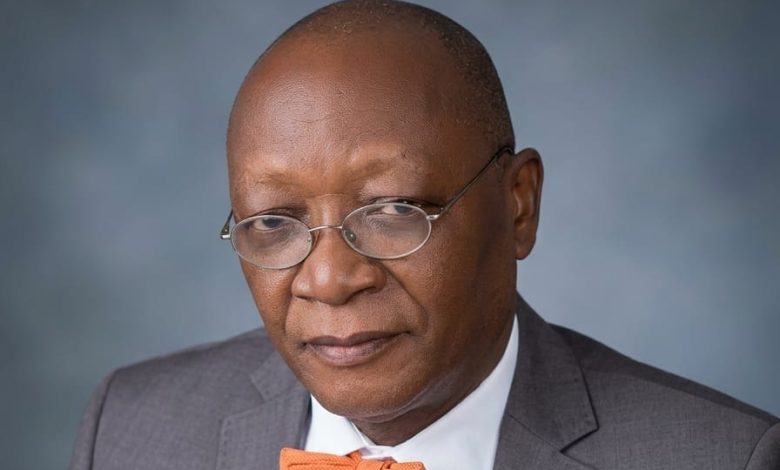
–Mr. Owoh, a Management Consultant, Researcher and Public Policy Analyst writes from Uyo. buyersconsult@gmail.com